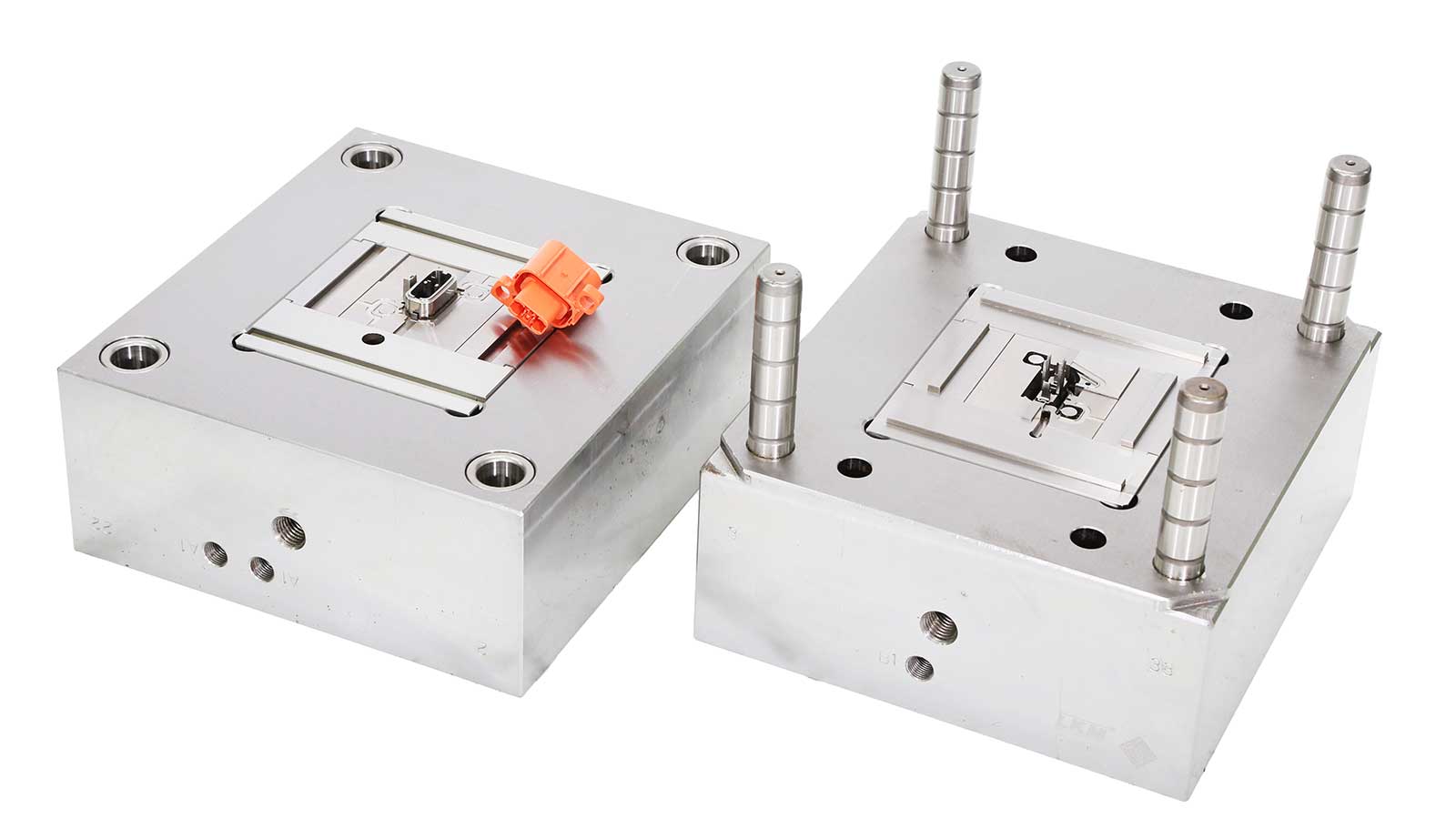

In the actual operational scenarios of plastic injection molds, there is a crucial criterion for determining mold failure. When the cost of repairing a mold reaches approximately one-third to one-half of the cost of creating a brand-new plastic injection mold, we consider this mold to have failed. At this stage, continuing to invest resources in repairing the mold often makes it difficult to achieve a balance between cost and benefit, resulting in a situation where the losses outweigh the gains.
Two Major Types of Plastic Injection Mold Failures
The failure of plastic injection molds can be classified into two categories: abnormal failure and normal failure.
Abnormal failure refers to the situation where a mold can no longer function normally before reaching the industry-recognized service life. This is usually caused by unexpected factors or abnormal working conditions, which have a significant impact on production schedules and cost control.
Normal failure occurs when a mold, after undergoing mass production, can no longer be used due to slow plastic deformation, relatively uniform wear, or fatigue fracture. This is a natural consequence of the mold being subjected to various factors over a long period of service.
Three Main Forms of Mold Failure
Although there are numerous types of molds, with greatly varying working conditions and different damaged parts, based on the specific manifestations of failure, they can be summarized into the following three types:
Wear Failure
Wear failure is caused by the relative motion on the surface of a plastic injection mold, which gradually leads to the loss of material from the contact surface. During the repeated opening and closing of the mold and the flow impact of the plastic melt, friction continuously occurs between the mold surface and the plastic or other components, resulting in gradual wear of the surface material. This, in turn, affects the precision and performance of the mold. For example, the parting surface and cavity surface of the mold are prone to wear after long-term use, leading to a decrease in the dimensional accuracy and surface quality of the products.
Fracture Failure
Fracture failure can be further divided into plastic fracture and brittle fracture, with brittle fracture including one-time fracture and fatigue fracture. Plastic fracture usually occurs when a mold is subjected to a large stress that exceeds the yield strength of the material, causing significant plastic deformation before fracture. Brittle fracture, on the other hand, often occurs suddenly under relatively low stress levels, without obvious signs of plastic deformation in the material. One-time brittle fracture may be caused by excessive impact loads or serious defects in the mold, while fatigue fracture occurs in weak parts or stress concentration areas of the mold after a certain number of cyclic loadings under alternating stress.
Plastic Deformation Failure
When the stress on a certain part of a mold exceeds the ultimate strength of the mold material at the operating temperature, plastic deformation occurs. This deformation changes the geometric shape or dimensions of the mold cavity and usually cannot be restored to its original state through conventional repair methods. For example, in the high-temperature and high-pressure injection molding environment, key parts of the mold such as the core and cavity may undergo plastic deformation due to long-term exposure to large pressures, resulting in increased dimensional deviations of the products and failure to meet quality requirements.
Key Factors Affecting the Service Life of Plastic Injection Molds
Generally, the service life of plastic injection molds is influenced by a combination of factors, including mold design level, mold structure, mold material heat treatment, material selection, machining processes, and mold lubrication. Relevant data shows that among the various factors causing plastic injection mold failures, mold structure irrationality accounts for approximately 25% of the cases. This indicates that designing a reasonable mold structure plays a crucial role in improving mold quality and extending its service life. A well-designed mold structure should ensure uniform force distribution during mold operation, avoid eccentric loading, and minimize stress concentration to reduce the risk of mold fracture and plastic deformation.
FAQ
Q: How can I determine if a plastic injection mold has reached its normal service life?
A: A mold can be considered to have reached its normal service life when, after mass production, it can no longer ensure product quality and production efficiency due to slow plastic deformation, relatively uniform wear, or fatigue fracture. Additionally, when the repair cost reaches approximately one-third to one-half of the cost of creating a new mold, it is also an important reference indicator.
Q: What repair methods can be used for molds with wear failure?
A: For molds with minor wear, methods such as polishing and grinding can be used for repair to restore the surface finish and dimensional accuracy of the mold. For parts with more severe wear, processes like surfacing and spraying can be employed for repair, followed by machining to meet the design requirements.
Q: How can I prevent mold fracture failure?
A: To prevent mold fracture failure, first, design the mold structure reasonably to avoid stress concentration. Select high-quality and suitable mold materials and perform correct heat treatment. During mold operation, avoid overloading and prevent exposure to excessive impact loads. Regularly inspect and maintain the mold to promptly detect and address potential defects.
Q: What role does mold lubrication play in extending its service life?
A: Mold lubrication can reduce friction and wear between mold surfaces, lower energy consumption, and prevent mold seizure and galling. At the same time, good lubrication also has a cooling effect, reducing the mold operating temperature and minimizing the impact of thermal stress on the mold, thereby extending its service life.