



In the field of injection mold processing, accurately controlling the delivery time is crucial for ensuring the smooth progress of customers’ production plans, enhancing market competitiveness, and maintaining good cooperative relationships. So, what factors are closely related to the delivery time of injection mold processing plants? The following will provide a professional and detailed analysis from multiple dimensions.
1. Complexity of Product Structure
The structural characteristics of injection – molded products have a decisive impact on the difficulty and cycle of mold processing. When the shape of plastic parts becomes more complex, the challenge of mold processing significantly increases. Specifically, the number of parting surfaces, assembly positions, snap – fits, holes, and ribs of plastic parts directly affects the complexity of mold processing. The more parting surfaces and functional positions there are, the higher the difficulty in mold structure design, processing technology, and subsequent debugging, and the longer the processing time required.
Generally, complex injection mold structures are often accompanied by more potential problem points. During the mold design, manufacturing, and trial – molding processes, these hidden problems may gradually emerge, such as unreasonable design of the mold’s cooling system leading to uneven cooling, or design defects in the ejection mechanism causing product deformation during ejection. To solve these problems, the mold needs to be repeatedly modified and debugged, which not only extends the mold processing cycle but may also have a negative impact on the final quality of the mold, reducing its stability and service life.
2. Customized Requirements from Customers
The diverse customized requirements of customers for injection – molded products are another important factor affecting the mold processing cycle. In terms of product appearance, customers may have different requirements for the surface texture of the product, such as a matte, glossy, or mirror finish. Different surface treatment processes have completely different standards for the mold’s processing accuracy, surface roughness, and polishing process. For example, a mirror finish requires an extremely high level of surface smoothness on the mold, which necessitates the use of fine polishing processes and special mold steels, undoubtedly increasing the mold processing difficulty and time cost.
In terms of dimensional accuracy and assembly tolerances, the higher the accuracy requirements customers have for the product, the more complex the mold processing and debugging process. High – precision dimensional requirements demand that the mold has precise cavity dimensions, a good guiding system, and stable molding process parameters. At the same time, for the assembly effect between product components, such as fit clearance and coaxiality, the mold also needs to be precisely controlled in design and manufacturing to ensure that the products can be assembled smoothly and meet the usage requirements. These strict customized requirements require the mold processing plant to invest more time and effort in mold design, processing, and debugging, thus extending the mold delivery time.
3. Mold Cavity Design
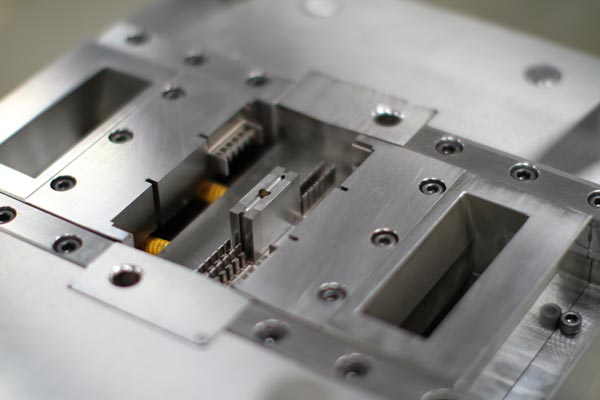
The number of mold cavities, that is, the number of products simultaneously molded by a set of molds, is scientifically designed according to the market demand for customers’ products. Different numbers of mold cavities directly lead to differences in the mold processing cycle. When the market demand for customers’ products is large, in order to improve production efficiency and reduce the unit production cost of products, multi – cavity molds are usually designed. However, the design and manufacturing of multi – cavity molds are more complex than those of single – cavity molds. During the mold design stage, it is necessary to reasonably plan the layout of the cavities to ensure uniform cooling and balanced ejection among the cavities, so as to avoid problems such as product deformation and dimensional deviations caused by unreasonable cavity layout.
In the mold manufacturing process, multi – cavity molds require the processing of more cavities, ejection mechanisms, and cooling channels, which not only increases the processing workload but also places higher requirements on the accuracy and stability of the processing equipment. In addition, the debugging process of multi – cavity molds is more cumbersome, and more time is needed to optimize and adjust the molding parameters of each cavity to ensure that all cavities can produce products that meet the quality requirements. Therefore, an increase in the number of mold cavities will significantly extend the mold processing cycle. In the early stage of new product development, since the market demand is not yet clear, a small number of mold cavities are usually used for production, which can not only meet the needs of small – batch production but also ensure a higher cost – effectiveness of the mold while shortening the mold development cycle.
4. Product Size Specifications
The size of the product is one of the basic factors affecting the injection mold processing cycle. Generally, the larger the product size, the larger the mold size accordingly. This not only increases the amount of mold raw materials used but also places higher requirements on the mold processing equipment. The processing of large molds requires the use of larger – specification processing centers, milling machines, and other equipment. The operation and debugging of these equipment are relatively complex, and processes such as tool replacement and workpiece clamping during processing also require more time.
At the same time, it is more difficult to control the processing accuracy of large molds. Due to their large size, large molds are more susceptible to factors such as thermal deformation and vibration during processing, making it difficult to ensure the dimensional accuracy and surface quality of the mold cavities. To ensure the processing quality of large molds, more advanced processing techniques and detection methods need to be adopted, such as high – speed processing, five – axis linkage processing, and three – coordinate measurement, which undoubtedly increase the mold processing time and cost. In addition, the processing of large – sized mold components, such as large ejector pins and inclined tops, is also more complex, and their processing and heat treatment require more time and effort.
5. Product Material Characteristics
The material properties of the product have an important impact on the selection of mold steels and the formulation of injection mold processing techniques, thereby affecting the mold processing cycle. Different materials have different physical and chemical properties, such as hardness, toughness, melting point, and shrinkage rate. For materials with high hardness, the mold cavity needs to use mold steels with higher hardness and undergo special heat treatment processes to improve the mold’s wear resistance and service life. However, high – hardness mold steels are more difficult to process, requiring the use of harder tools and lower cutting speeds, which increases the mold processing time.
For materials with good toughness, during the injection molding process, they are prone to defects such as flash and burrs. The mold needs to have a more precise clamping mechanism and higher clamping force to ensure that the mold can close tightly during the molding process and prevent material leakage. At the same time, for materials with a large shrinkage rate, the mold design needs to fully consider the material’s shrinkage characteristics, reasonably reserve the shrinkage amount, and make multiple adjustments according to the actual shrinkage situation during the trial – molding process to ensure that the product’s dimensional accuracy meets the requirements. These special requirements arising from material properties require the mold processing plant to fully consider them in mold design, material selection, and processing technique formulation, thus affecting the mold processing cycle.
In conclusion, the delivery time of injection mold processing plants is affected by a combination of factors, including the complexity of product structure, customized requirements from customers, mold cavity design, product size specifications, and product material characteristics. Mold processing plants need to have an in – depth understanding of these influencing factors, communicate fully with customers at the beginning of project acceptance, clarify customer needs and product characteristics, and formulate scientific and reasonable mold processing plans and delivery time schedules. At the same time, by continuously optimizing mold design, processing techniques, and production management processes, they can improve mold processing efficiency and quality to better meet customer needs and gain an advantage in the fierce market competition.