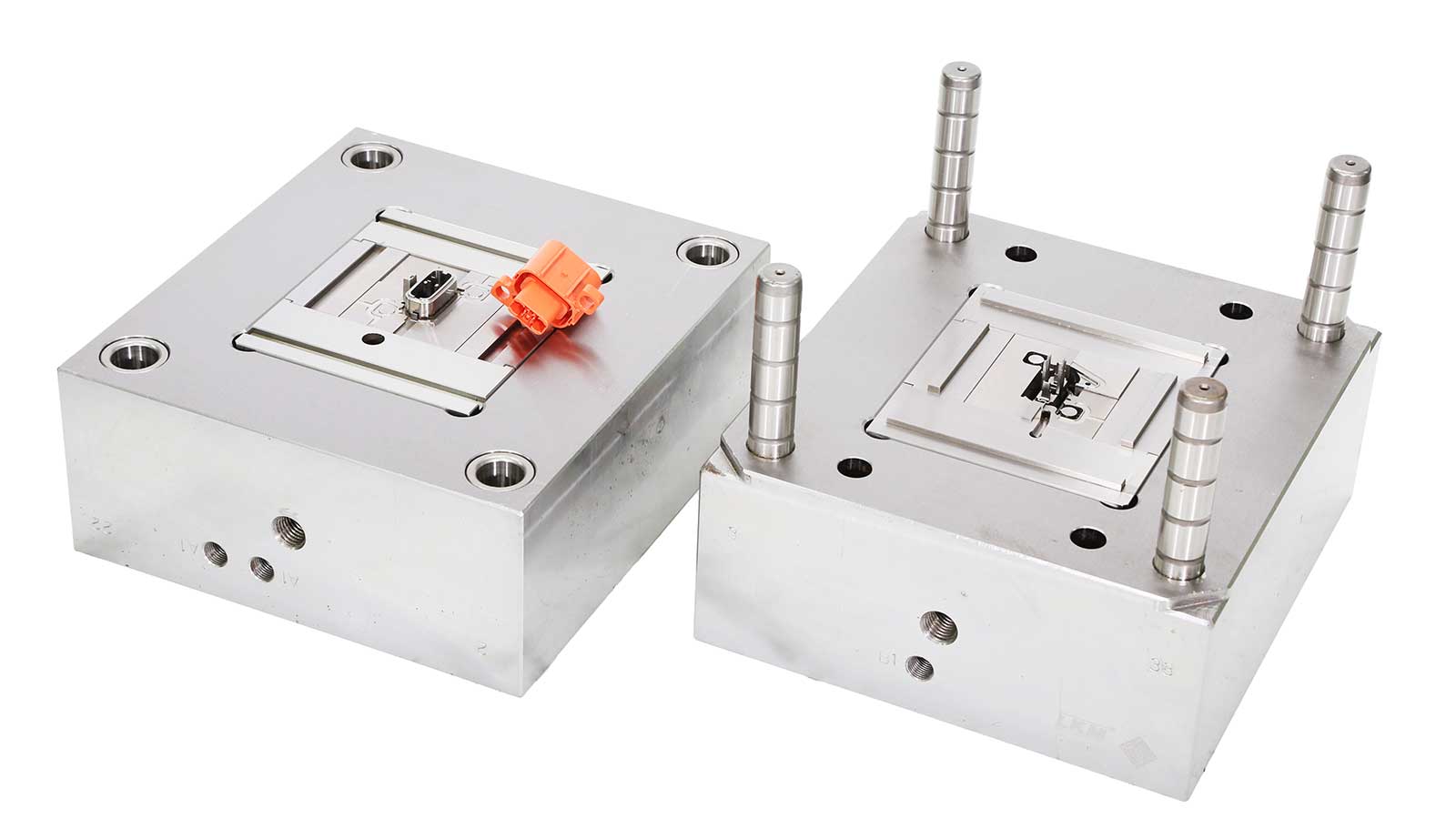




In the precision injection molding process, the cooling rate of injection-molded products is a core factor that determines product quality, production efficiency, and cost control. The cooling rate directly impacts the dimensional accuracy, surface quality of the products, as well as the service life of the molds and the overall production cycle. A thorough analysis of the factors influencing the cooling rate of injection-molded products in precision injection molds is of crucial importance for optimizing the injection molding process and enhancing product quality. The following will elaborate on four key dimensions in detail:
1. Wall Thickness Design of Plastic Products
The wall thickness design of plastic products is a fundamental factor influencing the cooling rate. There is a close relationship between the wall thickness of the product and the cooling time. Generally, the cooling time is proportional to the square of the thickness of the plastic product. Specifically, when the thickness of the plastic product doubles, the cooling time increases to four times the original.
This rule stems from the basic principles of heat transfer. A thicker product means more heat is stored inside, and the heat has a longer and more resistant path to transfer from the interior to the exterior. Therefore, during the mold design and product development stages, it is necessary to fully consider the functional requirements and usage scenarios of the product and reasonably plan the wall thickness dimensions. Under the premise of meeting the product’s strength and performance requirements, a uniform and relatively thin wall thickness design should be adopted as much as possible to effectively shorten the cooling time and improve production efficiency.
2. Material Selection for Precision Injection Molds
The material selection for precision injection molds, including the materials of the mold cores, cavities, and mold frames, has a significant impact on the cooling rate. The higher the thermal conductivity of the mold material, the more heat can be transferred out per unit time, resulting in a shorter cooling time.
For example, some high-performance mold steel materials have excellent thermal conductivity, enabling them to quickly transfer the heat inside the plastic product to the exterior of the mold, where it is carried away by the cooling system. In contrast, materials with poor thermal conductivity will cause heat to accumulate inside the mold, prolonging the cooling time of the product and potentially leading to quality issues such as product deformation and internal stress. Therefore, when selecting materials for precision injection molds, it is essential to comprehensively evaluate factors such as the thermal conductivity, mechanical strength, wear resistance, and cost of the materials to ensure that the molds can achieve efficient cooling effects while meeting production requirements.
3. Cooling Water Circuit Design of Precision Injection Molds
The design of the cooling water circuit is a key aspect that directly affects the cooling rate in precision injection molds. A reasonable layout of the cooling water pipes can significantly improve the cooling efficiency of the mold and shorten the cooling time of the product. Specifically, the closer the cooling water pipes are arranged to the mold cavity surface, the larger the pipe diameter, and the greater the number of pipes, the better the cooling effect and the shorter the required cooling time.
A larger pipe diameter can increase the flow rate of the cooling water, improving the heat exchange efficiency. Meanwhile, more water pipes can expand the cooling coverage area, ensuring uniform temperature across all parts of the mold. During the actual design process, it is necessary to use professional mold design software to optimize the layout of the cooling water circuit based on factors such as the structural shape of the mold, the size and shape of the product, and the requirements of the injection molding process. Through simulation analysis, the cooling effect can be accurately calculated, and the layout, pipe diameter, and number of water pipes can be adjusted to achieve the best cooling rate and cooling uniformity.
4. Type of Plastic Material Used
The type of plastic material used also has an important impact on the cooling rate. Different types of plastic materials have different thermal conductivity coefficients. A higher thermal conductivity coefficient indicates better heat transfer performance of the material. However, in actual injection molding processes, the relationship between the thermal conductivity performance of plastic materials and the cooling time is not a simple linear one.
Generally, higher melt temperatures and mold temperatures make the influence of the plastic material’s thermal conductivity performance on the cooling time more significant. Higher melt and mold temperatures mean more heat is stored inside the product, and it is also more difficult to transfer the heat. A lower ejection temperature indicates that the product has not been cooled sufficiently inside the mold and requires a longer cooling time to reach an appropriate ejection state. Therefore, when selecting plastic materials, it is necessary to comprehensively consider factors such as the thermal conductivity performance, melt temperature, mold temperature, and ejection temperature of the materials. Based on the specific requirements of the product and the production process conditions, an appropriate type of plastic material should be selected to optimize the cooling rate and improve product quality and production efficiency.
In conclusion, the cooling rate of injection-molded products in precision injection molds is influenced by a combination of factors, including the wall thickness design of plastic products, mold material selection, cooling water circuit design, and the type of plastic material used. In actual production processes, it is necessary to conduct a comprehensive and systematic analysis and optimization of these factors. Through precise design and reasonable process control, efficient cooling of injection-molded products can be achieved, thereby improving product quality, reducing production costs, and enhancing the competitiveness of enterprises in the market.