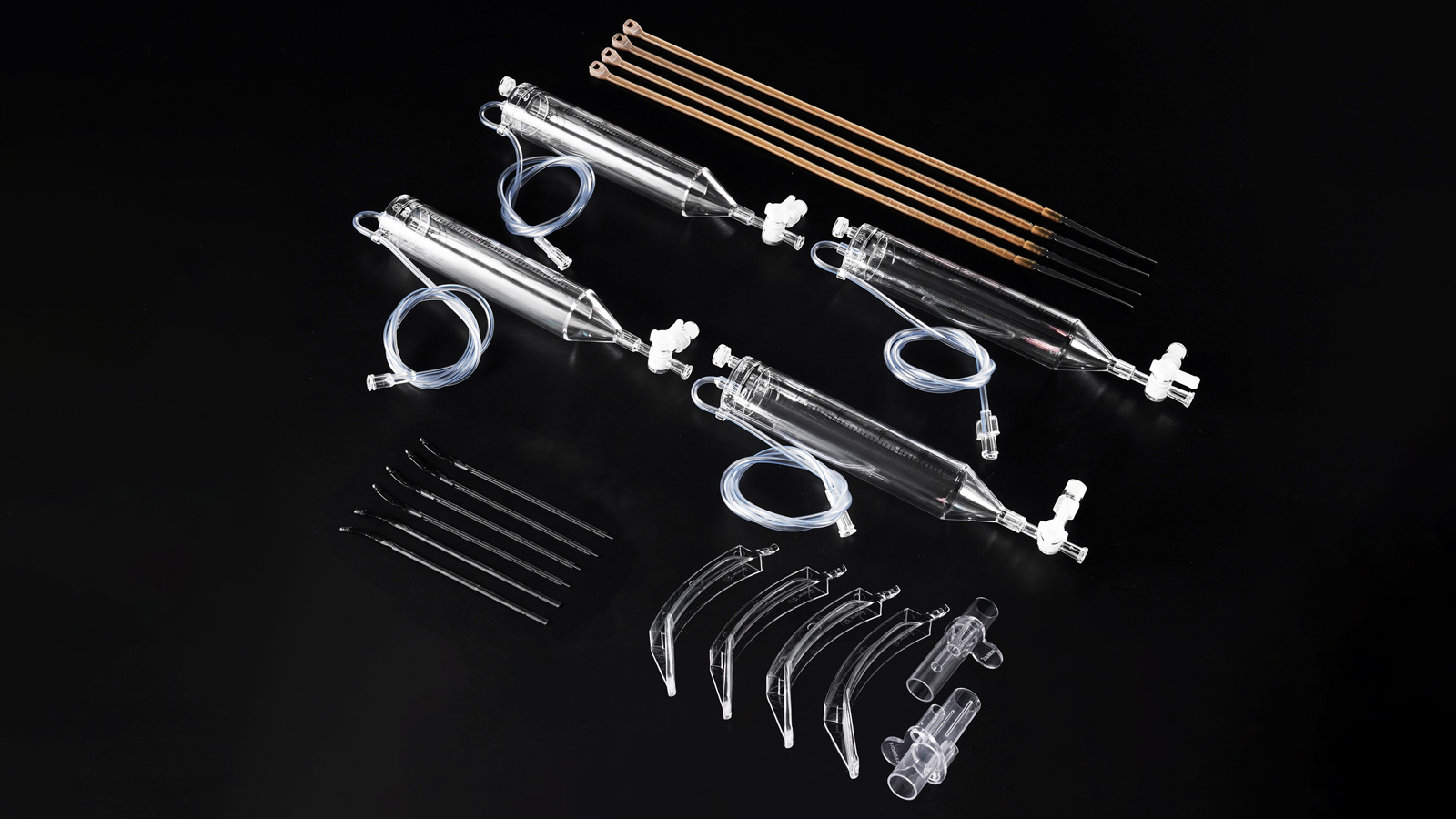
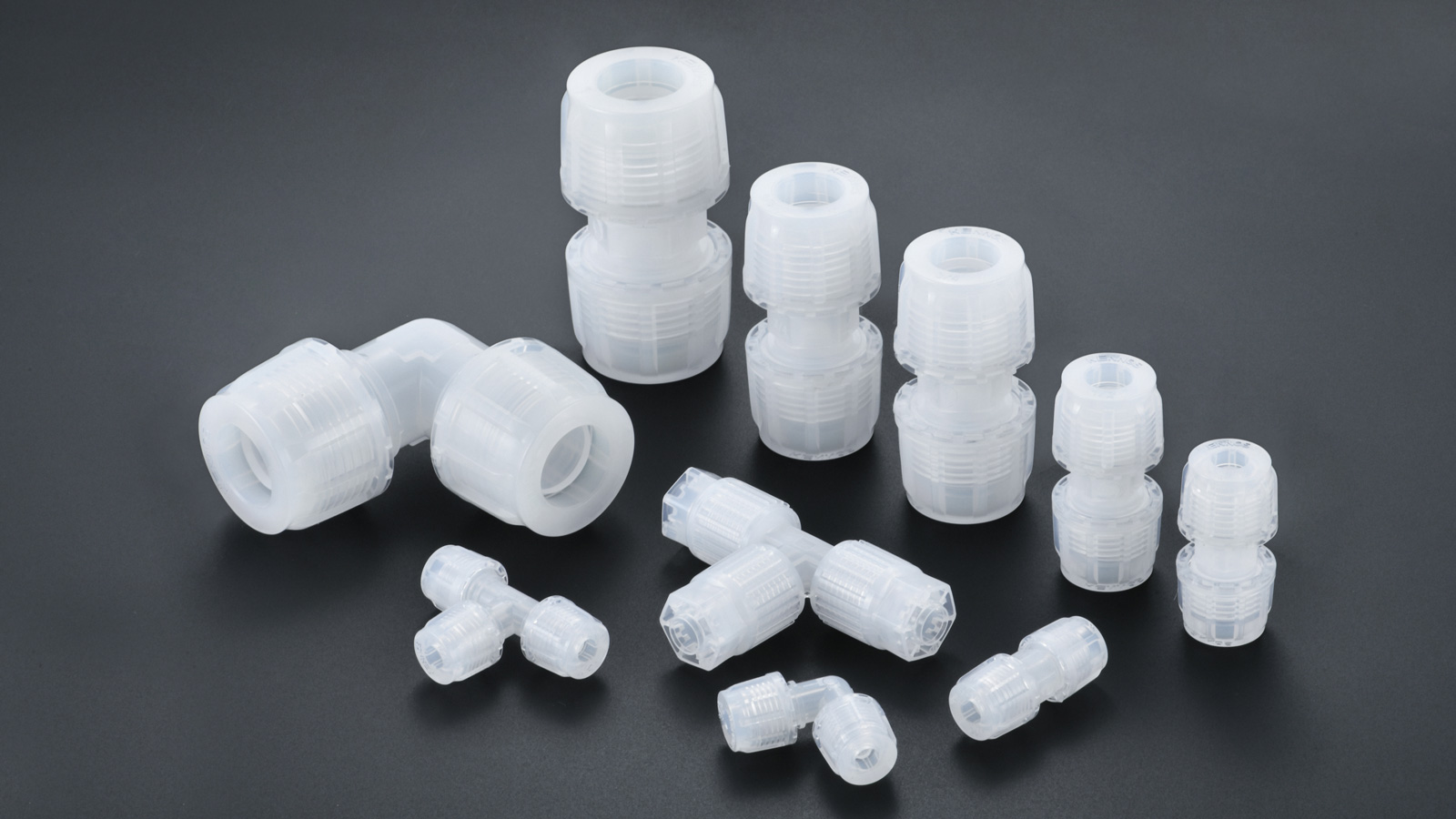
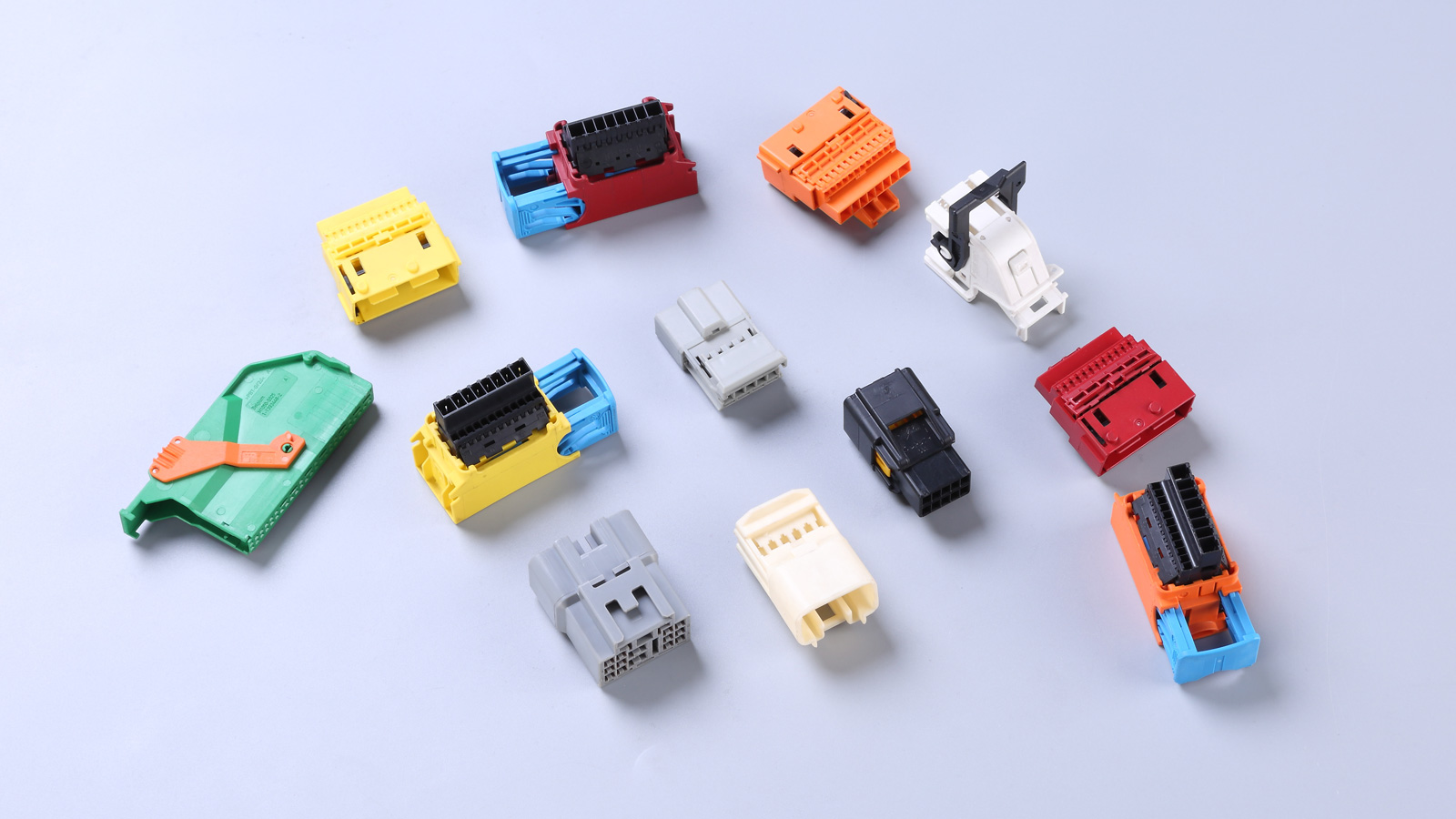
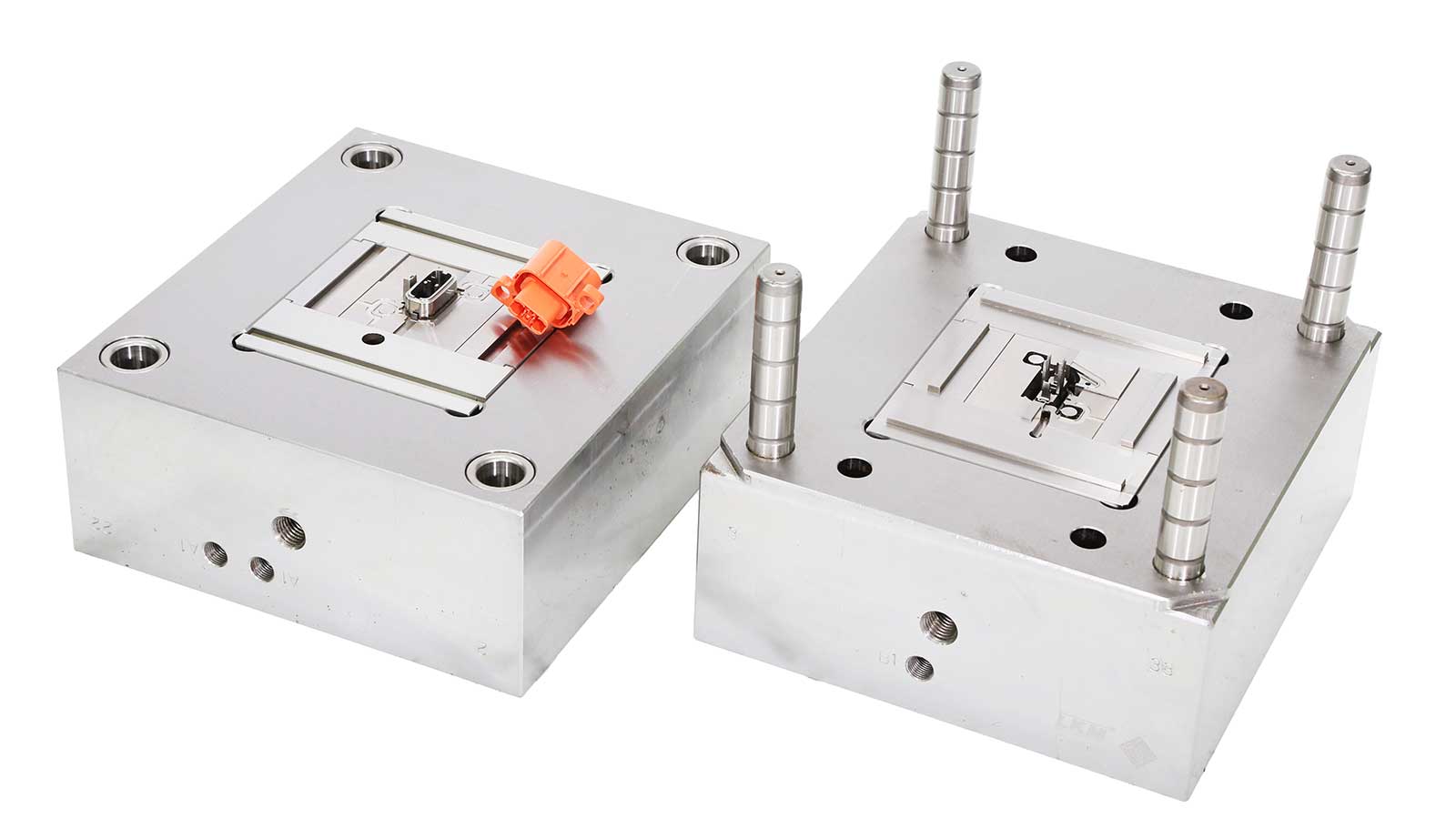




The medical field demands materials with exceptional biocompatibility, physical properties, and manufacturing precision. Liquid silicone rubber (LSR), renowned for its non-toxicity, high-temperature resistance, elasticity, and chemical stability, has become a cornerstone in medical device manufacturing. Its injection molding process meticulously controls every stage from raw material to finished product, ensuring compliance with medical-grade standards. Below is an in-depth exploration of the process flow, key technologies, and quality control measures.
1. Raw Material Preparation and Precision Metering
Medical-grade LSR typically employs a two-component system (Component A and Component B), requiring strict 1:1 mixing ratios. High-precision gear pumps and static mixers ensure ratio errors ≤0.5%, preventing incomplete curing or degraded physical properties. For instance, a 1% deviation in A/B ratios during medical catheter production could lead to localized hardness inconsistencies, compromising sealing performance. Mixed silicone undergoes 5–15 minutes of vacuum degassing to eliminate air bubbles, avoiding surface defects in final products.
2. Mold Design and Precision Manufacturing
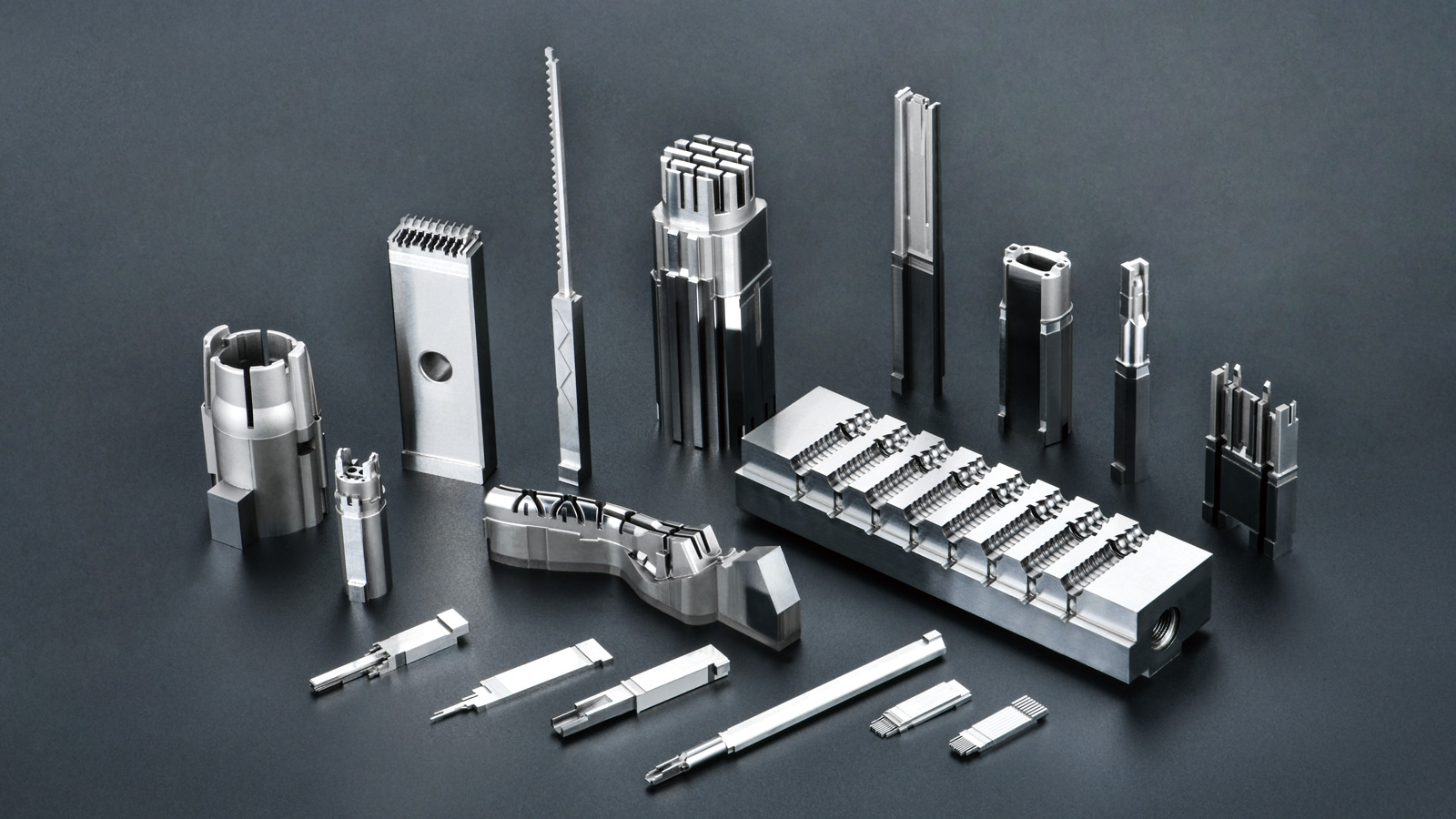
Medical molds must meet three core requirements:
- Material Selection: High-hardness stainless steel (e.g., S136 or H13) ensures corrosion resistance and dimensional stability.
- Surface Treatment: Polishing to Ra≤0.05μm or nickel-PTFE coating reduces demolding resistance and enhances surface gloss.
- Venting System: For thin-walled structures (e.g., hearing aid shells), 0.001–0.003-inch-deep venting slots prevent air trapping, avoiding burn marks or short shots.
Take infant nipple molds as an example: parting surface fit accuracy must stay within ±0.01mm, paired with needle-valve cold runner systems to prevent premature vulcanization in flow channels.
3. Injection Molding and Vulcanization Control
The process unfolds in three stages:
- High-Speed Filling: Initial injection at 50–100mm/s leverages LSR’s shear-thinning behavior for rapid cavity filling.
- Low-Pressure Packing: Switching to 10–20mm/s at the filling end with 5–15MPa pressure minimizes air entrapment or insert displacement.
- Vulcanization Curing: Mold temperature is strictly maintained at 170–200°C, with curing time calculated based on product thickness (e.g., 10–15 seconds for 1mm thickness, extending 5–10 seconds per additional millimeter). Medical seals, for example, require optimized curing times to achieve ≤10% compression set.
4. Post-Processing and Quality Inspection
Finished products undergo three post-processing steps:
- Deburring: Mechanical grinding or laser trimming ensures flash thickness ≤0.05mm.
- Secondary Vulcanization: Medical-grade items are baked at 180–200°C for 2–4 hours to release volatiles and enhance crosslinking density.
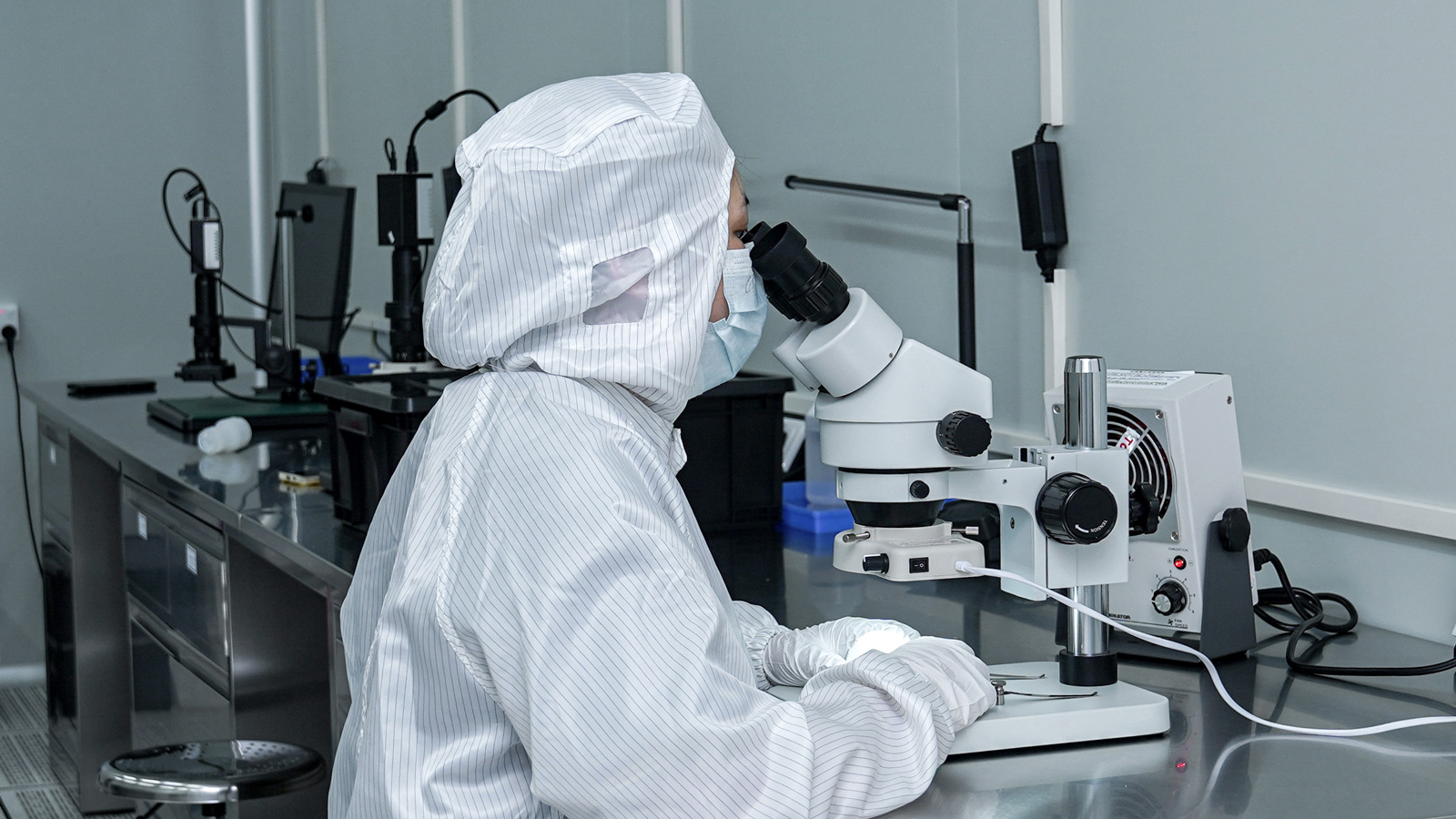
- Full Inspection: Optical detectors identify surface defects, while samples undergo peel strength tests (≥1.5N/mm) and biocompatibility certifications (e.g., ISO 10993).
5. Process Optimization and Typical Applications
Optimizations include:
- Molecular Bonding: Silane coupling agents on PC substrates improve LSR adhesion to rigid materials.
- Microstructure Replication: Micro-EDM-machined molds achieve precise replication of microholes (≤0.1mm diameter) or complex textures.
- Sterile Production: Class 10,000 cleanrooms ensure initial contamination levels ≤10CFU/g during molding and packaging.
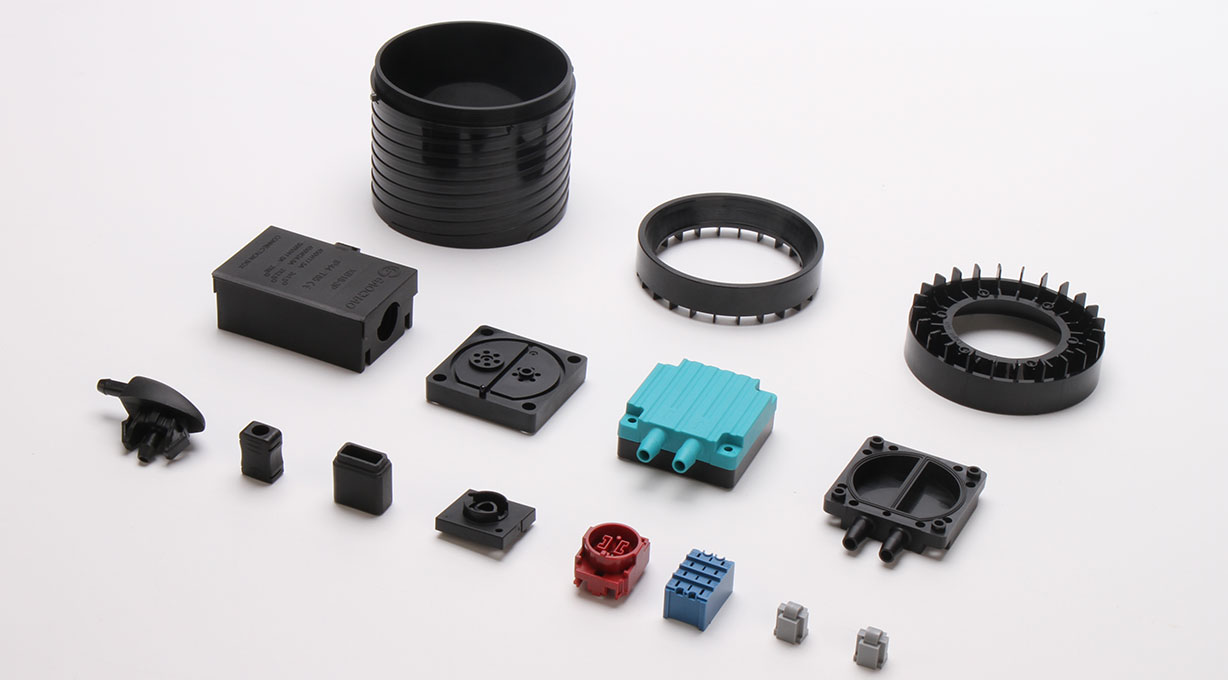
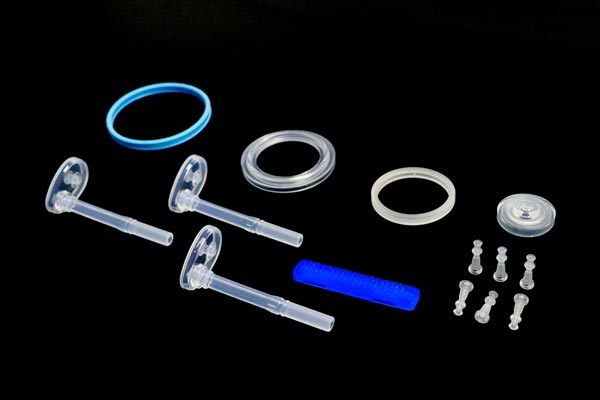
Currently, this process is widely used in high-end medical fields such as dialysis filters, respiratory mask seals, and implantable device encapsulation. For instance, optimizing mold temperature gradients and curing curves for an insulin pump encapsulation part raised yield rates from 85% to 98%, with annual production exceeding 5 million units.
The medical LSR injection molding process integrates material science, precision manufacturing, and quality control. Every stage—from raw material metering to final inspection—demands micrometer-level precision and millisecond-level timing to meet the medical industry’s stringent safety and reliability standards.