



In the field of plastic product manufacturing, the quality of plastic injection molds directly determines the final quality of plastic parts and is a key factor in determining whether products can meet high market standards. Mold design, as the core aspect of ensuring mold quality, is like the foundation of a building, and its importance cannot be overstated. The following elaborates on 9 mold design key points for ensuring the quality of plastic injection molds, helping you quickly build a solid framework for successful molds.
1. Gate Location Selection: Ensuring Smooth Filling
The gate should be precisely located at the thicker sections of the product. This design point is based on the flow characteristics of the plastic melt in the mold cavity. Thicker sections provide more space for the melt to flow, effectively ensuring a smooth and complete filling process. This helps avoid defects such as short shots and sink marks caused by insufficient filling, laying a solid foundation for producing high-quality plastic parts.
2. Balancing Appearance and Function: Smart Gate Placement
While ensuring the filling effect, the gate should be placed in areas that have the least impact on the product’s appearance and function as much as possible. Usually, the gate can be set at the edges or bottom of the product, which are less conspicuous areas. This not only meets the requirements of the production process but also minimizes the interference of the gate with the overall aesthetics and usability of the product, enhancing its market competitiveness.
3. Cold Slug Well Design: Facilitating Runner Ejection
Installing a puller pin at the end of the cold slug well is an important design detail. During the injection molding process, the plastic melt that enters the mold cavity first tends to cool and solidify, forming cold slugs. If these cold slugs are not handled in a timely manner, they can affect the quality of the product. The puller pin helps pull the cold slugs out of the runner during mold opening, ensuring smooth runner ejection and preventing cold slug residues from adversely affecting subsequent production.
4. Large and Flat Products: Multi-point Gating to Prevent Deformation
For large or flat-shaped products, using a multi-point gating approach is an effective strategy to prevent product warping and short shots. Multi-point gating allows the plastic melt to enter the cavity from multiple directions simultaneously, making the product’s filling process more uniform and reducing warping caused by local pressure differences. At the same time, sufficient gating points ensure that the plastic fully fills the cavity, avoiding short shots and ensuring the product’s dimensional accuracy and appearance quality.
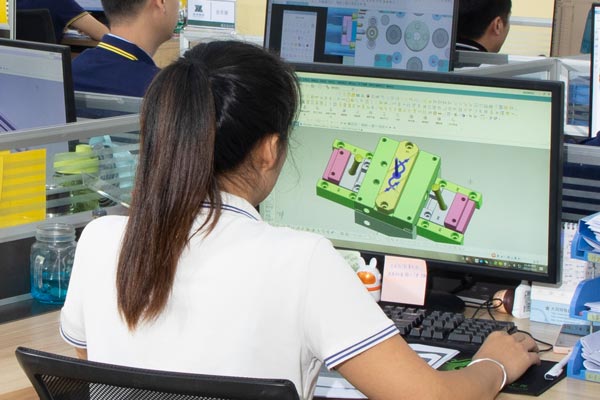
5. Optimizing Filling Flow: Reducing Pressure Loss and Facilitating Venting
The gate location should be selected to minimize the plastic filling flow path. A shorter filling path reduces the pressure loss of the plastic melt during flow, lowering energy consumption and improving injection efficiency. In addition, a reasonable gate location is also beneficial for mold venting. During the injection process, the air in the cavity needs to be discharged in a timely manner; otherwise, it can form bubbles and other defects in the product. By optimizing the gate location, the air can be guided to discharge smoothly, ensuring the product’s density and quality stability.
6. Protecting Slender Cores: Avoiding Direct Gate Impact
Special care should be taken when placing gates near slender cores. Since slender cores have relatively low strength, direct impact from the melt flow can easily cause them to deform, shift, or bend, seriously affecting the product’s dimensional accuracy and shape stability. Therefore, it is advisable to avoid placing gates near slender cores as much as possible. If it is unavoidable, corresponding protective measures, such as adding buffer structures, should be taken to reduce the impact force of the melt flow on the core.
7. Gate Size Determination: Flexible Adjustment and Optimization
The determination of the gate size should take into account factors such as the product’s size, geometric shape, structure, and plastic type. Generally, a smaller gate size can be selected for initial design, and then adjusted according to the actual situation during mold testing. Through mold testing, the product’s filling condition and surface quality can be observed, and the gate size can be flexibly adjusted based on this feedback to achieve the best injection effect and ensure that the product’s quality meets the requirements.
8. Predicting Weld Lines: Ensuring Appearance and Function
Using mold flow analysis technology or rich practical experience, it is possible to predict in advance the weld lines that may occur on the product due to the gate location. Weld lines are traces formed when the plastic melt converges in the cavity. If weld lines appear in critical areas of the product, they can have an adverse impact on the product’s appearance and function. Therefore, during the design stage, the position of the weld lines should be evaluated and optimized. By adjusting the gate location and quantity, the negative impact of weld lines on the product can be minimized, ensuring the overall quality of the product.
9. Multi-cavity Mold Layout: Rational Planning of Gating Methods
In multi-cavity mold design, for identical products, a symmetrical gating approach should be adopted. This layout makes the filling process of each cavity more balanced, ensuring product consistency. For different products molded in the same plastic injection mold, the largest product should be placed near the main runner first. Since the main runner is the main channel for the plastic melt to enter the mold, products near the main runner can receive a more sufficient supply of plastic, which is beneficial for ensuring their filling effect and quality. At the same time, this layout can also optimize the overall structure of the mold and improve its production efficiency and stability.
Mastering the above 9 key design points for plastic injection molds and applying them flexibly in actual design can effectively improve the quality and performance of the mold, providing a strong guarantee for producing high-quality plastic parts. In the highly competitive plastic product market, high-quality mold design will become a key factor for enterprises to stand out and achieve sustainable development.