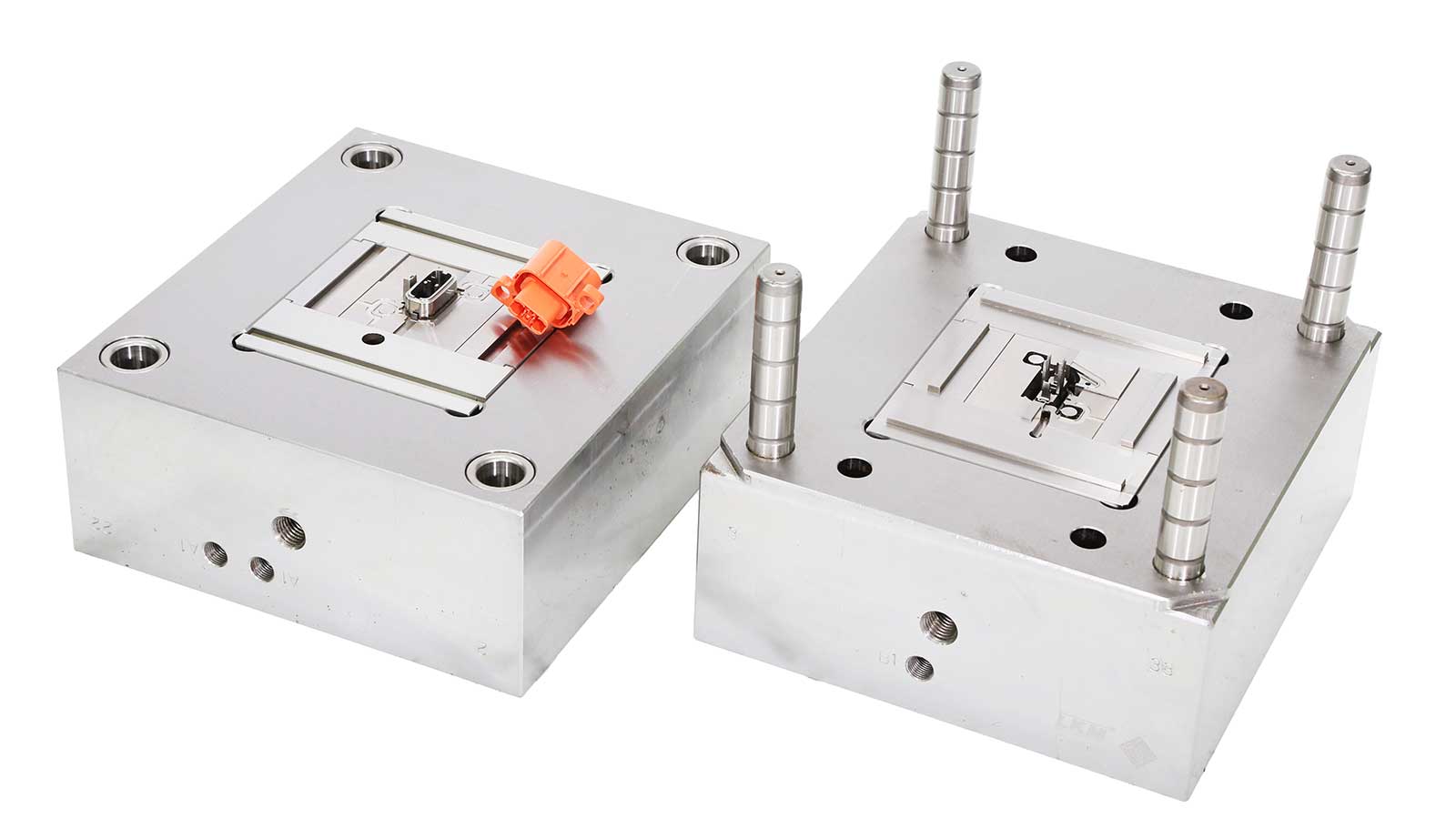



In the fiercely competitive mold manufacturing industry, the quality of mold processing directly affects the precision, performance, and cost of products. As the saying goes, “The devil is in the details,” and every minor aspect can have a significant impact on the final finished product. So, what are the keys mold processing details? Let’s delve into them together.
I. Rational Use of Cooling Lubricants
Cooling lubricants play a crucial role in mold processing, possessing three core functions: cooling, washing, and lubrication. Rational use of cooling lubricants can fully leverage these effects, effectively maintaining the cleanliness of the processing area and strictly controlling the grinding heat within the allowable range. This helps prevent thermal deformation of the mold workpiece and ensures processing precision.
To further optimize the cooling conditions during grinding, a series of innovative measures can be taken. For example, using oil-immersed grinding wheels or internally cooled grinding wheels, and precisely introducing the cutting fluid into the center of the grinding wheel so that it can directly reach the grinding area, achieving efficient cooling and effectively preventing surface burning of the workpiece, thus safeguarding processing quality.
II. Effective Control of Quenching Stress
Mold workpieces often have quenching stress after heat treatment. Meanwhile, the reticular carbide structure is prone to phase transformation under the action of grinding force, which can easily cause cracks in the workpiece, seriously affecting the service life and performance of the mold. Therefore, minimizing quenching stress is a key link in mold processing.
For high-precision injection mold processing, in order to completely eliminate the residual stress generated during grinding, low-temperature aging treatment should be carried out after grinding. Through this process, the organizational structure of the mold can be effectively stabilized, improving its dimensional accuracy and stability, and ensuring that it maintains good performance during long-term use.
III. Methods for Eliminating Grinding Stress
In addition to low-temperature aging treatment, there is another effective method for eliminating grinding stress. Immerse the injection mold in a salt solution at 260 – 315℃ for 1.5 minutes, and then quickly cool it in oil at 30℃. After this special treatment, the hardness of the injection mold can be reduced by 1HRC, and the residual internal stress can be significantly reduced by 40% – 65%, effectively improving the overall performance of the mold and reducing the risks of deformation and cracking caused by stress.
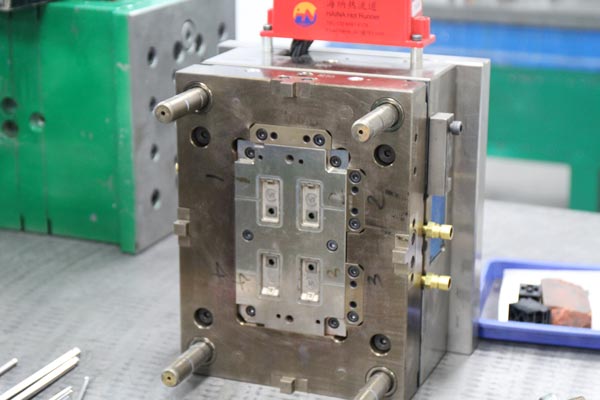
IV. Isothermal Grinding for High-Precision Molds
For high-precision injection molds with a dimensional tolerance strictly controlled within 0.01mm, the influence of ambient temperature on processing precision cannot be underestimated. Even slight temperature fluctuations can cause thermal expansion and contraction of the mold material, affecting dimensional accuracy. Therefore, isothermal grinding is a necessary means to ensure the processing quality of high-precision molds.
To meet this requirement, we have specially built an air-conditioned processing workshop. Through a precise environmental control system, the processing temperature of the injection mold is always maintained at a constant level, providing a stable and reliable environmental condition for high-precision grinding and ensuring that the mold’s dimensional accuracy reaches an extremely high level.
V. Unique Advantages of Electrolytic Grinding
Electrolytic grinding, as an advanced mold processing technology, has significant advantages in improving mold manufacturing precision and surface quality. During the electrolytic grinding process, the main function of the grinding wheel is to scrape off the oxide film rather than directly grind the metal. This characteristic greatly reduces the grinding force and significantly lowers the grinding heat, effectively avoiding common problems in traditional grinding processes such as grinding burrs, cracks, and burns. It has become an indispensable key process in injection mold processing, providing a strong guarantee for manufacturing high-precision and high-quality molds.
FAQ
Q: What impact will an improper choice of cooling lubricant have on mold processing?
A: If the cooling lubricant is improperly selected, it may not be able to fully exert its cooling, washing, and lubricating functions, resulting in poor control of the grinding heat and causing thermal deformation of the mold workpiece, which affects processing precision. At the same time, insufficient lubrication may increase the grinding force, accelerate the wear of the grinding wheel, reduce processing efficiency, and may also lead to a decline in the surface quality of the workpiece, such as burns and scratches.
Q: How are the time and temperature for low-temperature aging treatment determined?
A: The time and temperature for low-temperature aging treatment need to be comprehensively determined based on factors such as the mold material, size, processing technology, and the magnitude of the residual stress. Generally, for common mold steels, the low-temperature aging treatment temperature is between 150 – 200℃, and the holding time is 1 – 2 hours for every 25mm of mold thickness. However, specific parameters need to be optimized and adjusted through experiments and practical production experience to achieve the best effect of eliminating stress.
Q: Is the salt solution immersion and oil cooling treatment suitable for all types of injection molds?
A: The salt solution immersion and oil cooling treatment is not suitable for all types of injection molds. This treatment method is mainly aimed at certain specific materials and structures and has certain requirements for the initial state of the mold. For example, it has a relatively obvious effect on some molds with high hardness and large internal stress, but for some special alloy materials or molds with complex shapes, it may be necessary to conduct evaluations and tests first to determine whether this method is applicable and avoid damaging the mold performance or causing mold damage due to improper treatment.
Q: What is an appropriate temperature fluctuation range in an isothermal grinding workshop?
A: For isothermal grinding of high-precision injection molds, the temperature fluctuation in the workshop should be controlled within a very small range as much as possible. Generally, a temperature fluctuation range of ±1℃ is relatively ideal, and for some molds with extremely high precision requirements, the temperature fluctuation even needs to be controlled within ±0.5℃ to ensure the stability of the dimensional precision during mold processing.
Q: How does the cost of electrolytic grinding compare to that of traditional grinding?
A: The equipment cost of electrolytic grinding is relatively high because it requires special equipment such as an electrolytic power supply and an electrolyte circulation system. At the same time, the use and maintenance of the electrolyte also add certain costs. However, from the perspective of long-term production, electrolytic grinding has a small grinding force and low grinding heat, which can effectively reduce the wear of the grinding wheel, improve processing efficiency, and reduce the scrap rate. For the processing of high-precision and complex-shaped molds, the overall cost may actually be lower, and it has obvious advantages in ensuring processing quality.