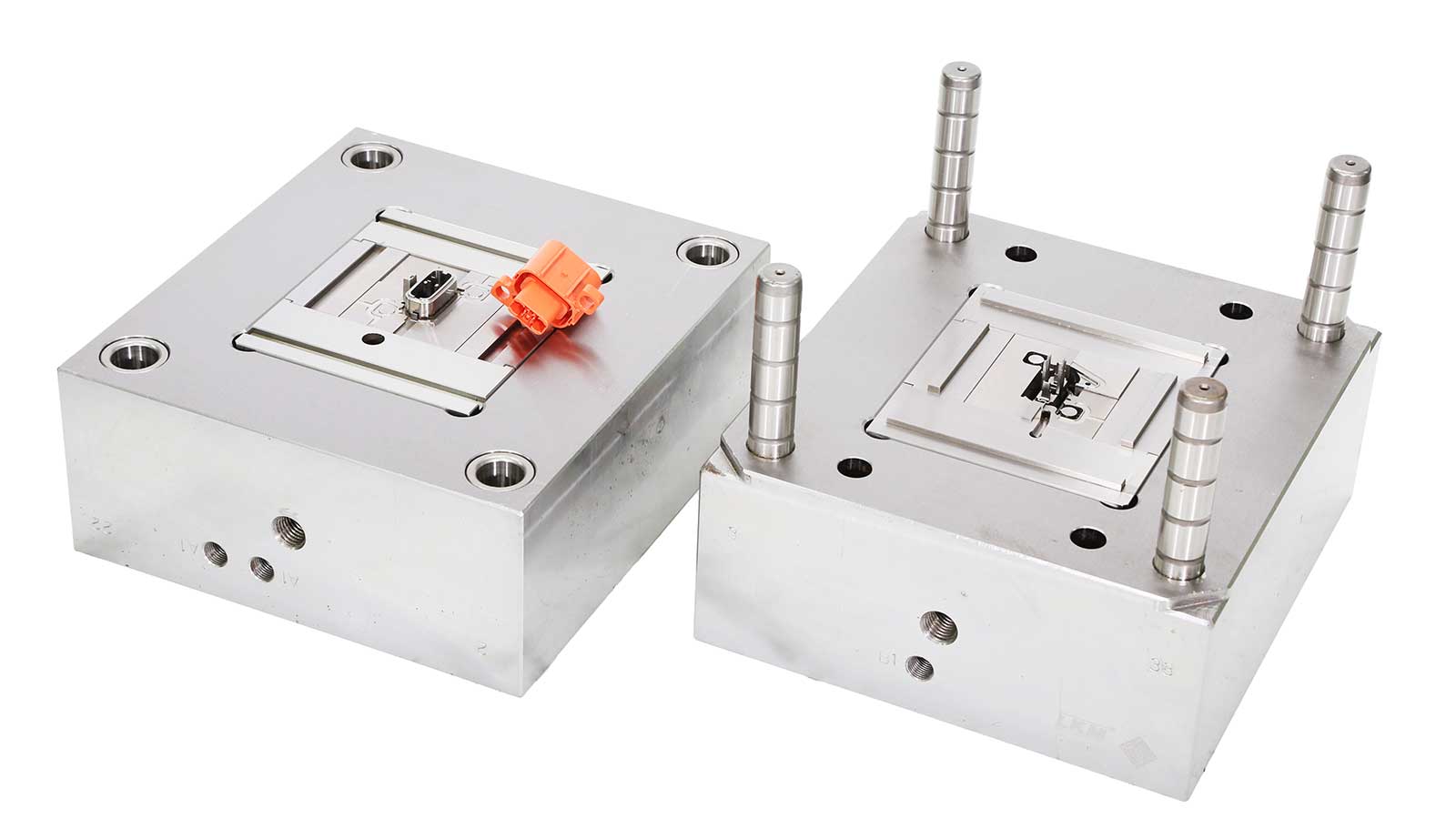




Compared with other machining processes, precision injection mold processing has certain particularities, which impose specific requirements and limitations on mold processing equipment. Overall, precision injection mold processing equipment needs to meet the following basic requirements.
Firstly, the machine tool should have good rigidity and an ultra-large load-bearing capacity that matches the weight of the mold blocks. During the precision injection mold processing, the mold is subjected to significant pressure and impact forces. If the machine tool lacks sufficient rigidity, vibrations are likely to occur during processing, which will affect the machining accuracy and surface quality of the mold. Moreover, adequate load-bearing capacity ensures the machine tool operates stably during processing of large, heavy molds, preventing equipment failures or mold damage.
Secondly, the size of the worktable should be compatible with the external dimensions of the mold. Generally, worktables are rectangular, square, or circular in shape and should not be narrow and long. This is because a narrow and long worktable is not conducive to the clamping and positioning of the mold during processing, making it prone to displacement and affecting machining accuracy. At the same time, a relatively large space is required in the height direction and its stroke. A large height space can meet the processing needs of molds of different heights, while a large stroke ensures that the cutting tool can reach all parts of the mold during processing to complete comprehensive machining operations.
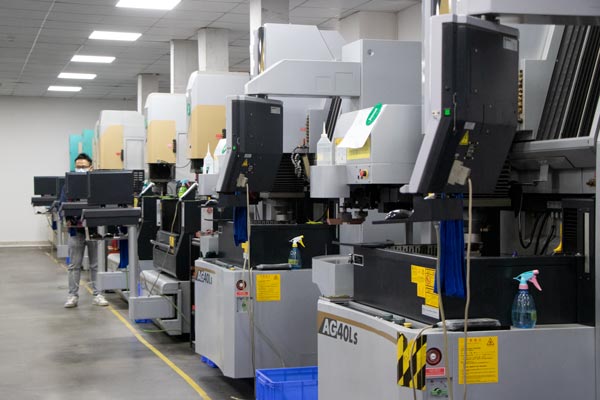
Thirdly, the equipment needs to have high precision and good precision retention. The machining accuracy requirements for precision injection molds are extremely high. The dimensional accuracy, shape accuracy, and positional accuracy of the mold directly affect the quality of the final injection-molded products. Therefore, the processing equipment must have high-precision machining capabilities to accurately control the movement trajectory and cutting amount of the cutting tool during processing. In addition, good precision retention is also crucial. It ensures that the machining accuracy of the equipment does not significantly decline due to factors such as wear and aging during long-term use, thereby maintaining the stability of mold processing quality.
Fourthly, the equipment should be able to remove the excess material quickly and efficiently and have high reliability to maintain continuous and long-term load operation. Removing the excess material is a key step in mold processing. Quick and efficient removal of the excess material can improve processing efficiency and shorten the production cycle of the mold. At the same time, high reliability is the foundation for ensuring the long-term stable operation of the equipment. Mold processing often requires continuous operation for a relatively long time. Suppose the equipment has low reliability and frequently experiences failures during processing. In that case, it will not only delay the production schedule but also lead to a decline in mold processing quality and even damage to the mold.
Fifthly, to adapt to the processing requirements of complex spatial curved surfaces and considering the large amount of machining, the machine tool needs to have multi-axis linkage capabilities and be equipped with a numerical control system with a large information capacity. The processing of complex spatial curved surfaces is one of the difficulties in precision injection mold processing. Multi-axis linkage capabilities allow the cutting tool to move simultaneously in multiple directions, enabling precise processing of complex curved surfaces. A numerical control system with a large information capacity can store and process a large amount of machining programs and parameters, meeting the programming needs of complex mold processing and improving the degree of automation and machining accuracy.
In addition to these basic requirements, precision injection mold processing equipment also has some special requirements. For example, machine tools for processing plastics usually need to have higher speeds. Since the cutting force of plastic materials is relatively small, high-speed machining can improve processing efficiency and improve the surface quality of the processed parts. To reduce costs, such machine tools can adopt a lightweight structure. In addition, for the large-scale repetitive processing of some simple processes, special-purpose machine tools can be used. Special-purpose machine tools are designed for specific processes, featuring a simple structure, convenient operation, and high processing efficiency, which can meet the needs of mass production.