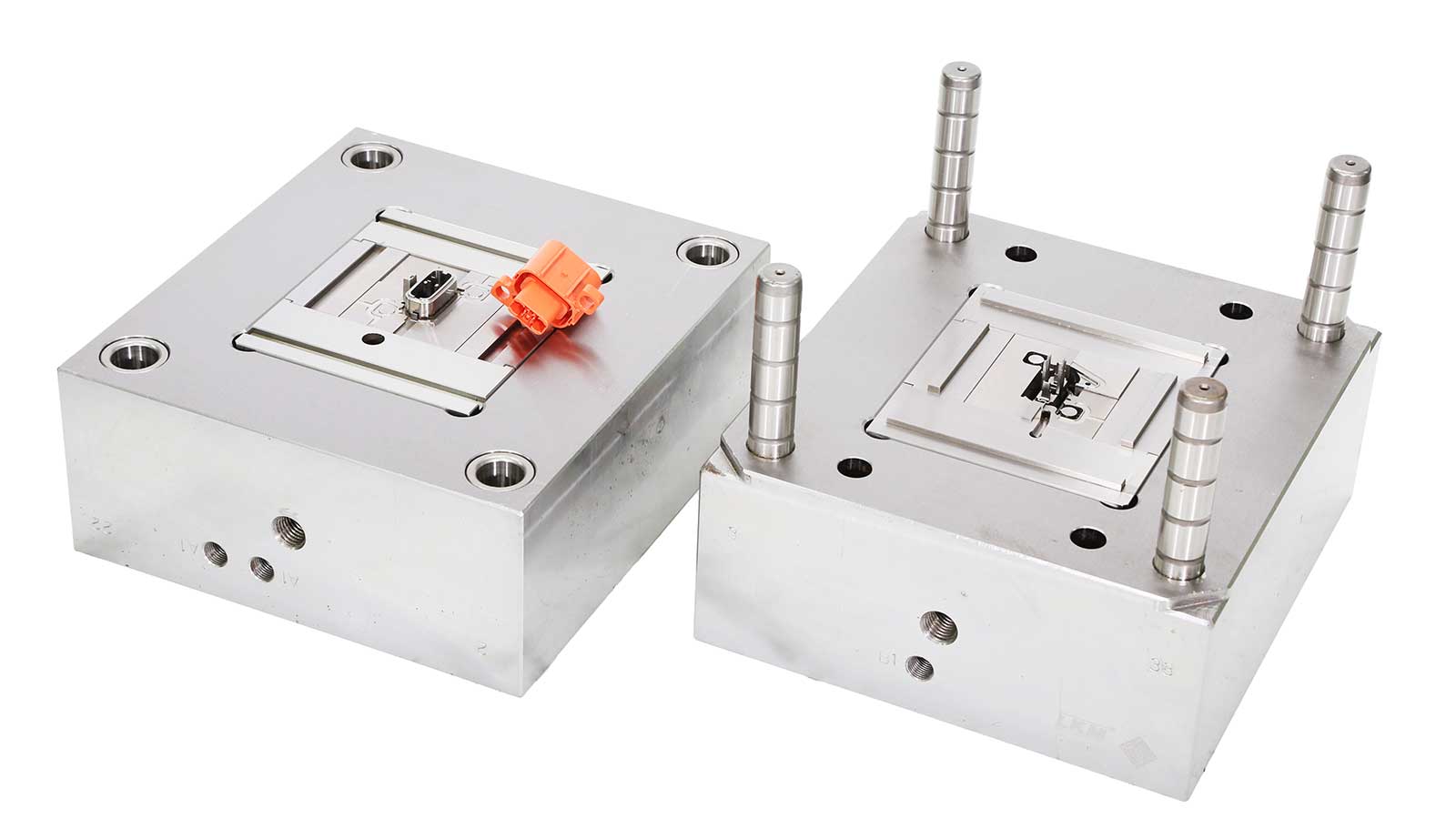



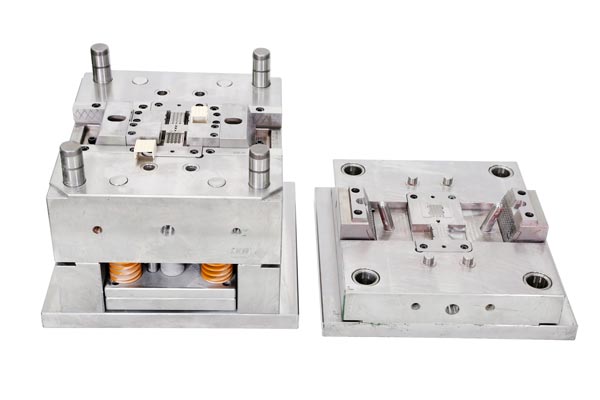
In the field of industrial production, injection molds hold a pivotal position, and their quality directly affects the quality of the final products. For mold factories, improving the service life and precision of injection molds and shortening the manufacturing cycle are crucial measures for effectively reducing costs. However, during the actual use of injection molds, defects such as deformation, wear, and even breakage often occur, making it inevitable to repair plastic injection molds.
Precise Analysis Before Mold Repair
Before carrying out mold repair work, it is essential to conduct a comprehensive and detailed analysis and research based on the adverse conditions of plastic products. Delve into the root causes of the defects in plastic parts and then propose practical remedial solutions. Since molding conditions are relatively easy to adjust, the usual practice is to prioritize changing the molding conditions. Only when changing the molding conditions fails to solve the problem will mold repair be considered.
The Principle of Caution in Mold Repair
Mold repair is a highly challenging and risky task. Without sufficient confidence, one should never rashly start repairing the mold. Once a mold is modified, it is basically impossible to restore it to its original state. This may not only lead to a decline in mold performance but also trigger a series of new problems, increasing the difficulty and cost of subsequent repairs.
Common Mold Repair Methods
TIG Welding Repair
TIG welding repair uses the arc generated between a continuously fed welding rod and the workpiece as the heat source, and the gas ejected from the welding torch nozzle protects the arc to achieve welding. Currently, TIG welding is a relatively common repair method, suitable for most metals, including carbon steel and carbon steel. Its advantage lies in its relatively low cost, so it is widely used. However, TIG welding also has obvious drawbacks, such as a large heat-affected area and large spot welds. In the field of precision mold repair, these drawbacks have gradually become prominent, causing TIG welding to be gradually replaced by laser welding.
Brush Plating Repair
Brush plating technology uses a special DC regulated power supply device. The positive terminal of the power supply is connected to the plating brush, which serves as the anode during brush plating; the negative terminal is connected to the workpiece, which serves as the cathode. High-purity fine graphite blocks are used as anode materials, and the graphite blocks are wrapped with cotton and wear-resistant nylon sleeves. During operation, the power supply unit is adjusted to an appropriate operating voltage, and the plating brush soaked with plating solution is moved at a certain relative speed over the area to be repaired on the workpiece surface. At this time, the metal cations in the plating solution diffuse to the workpiece surface under the action of the electric field force. The surface layer gains electrons and transforms into metal atoms, which then accumulate and crystallize to form a coating, that is, a uniform deposition layer is obtained on the working surface of the repaired mold cavity.
Laser Cladding Repair
Laser cladding repair uses laser, formed by focusing a high-power stream of coherent photons, as the heat source for welding. This welding method is generally divided into continuous-power laser welding and pulsed-power laser welding. The significant advantage of laser welding is that it does not require operation in a vacuum environment, but its drawback is that its penetrability is not as strong as that of electron beam welding. During laser welding, precise energy control is required, enabling the welding of high-precision components. Laser welding can be applied to many metals, especially excelling at solving the welding problems of some difficult-to-weld metals and different metals. Currently, laser cladding repair technology has been widely used in the field of mold repair.
Repairing injection molds is a highly technical and demanding task. In actual operation, it is necessary to select an appropriate repair method according to the specific defects and repair requirements of the mold to ensure the performance and quality of the repaired mold and provide a solid guarantee for the efficient and stable operation of industrial production.