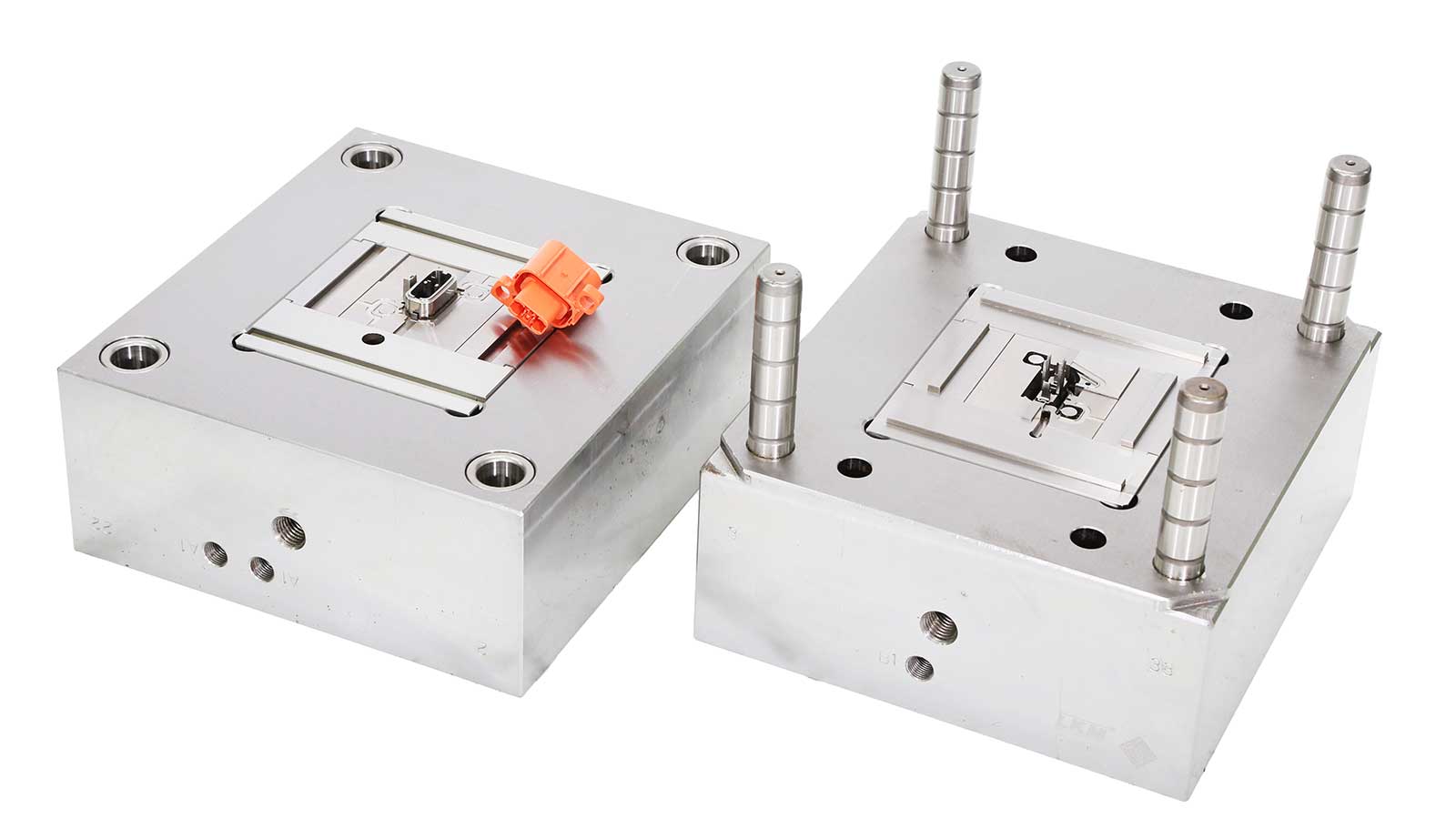



In the production process of plastic products, whether the products will have defects not only depends on the machining accuracy of the mold but also the assembly accuracy of the plastic mold plays a crucial role. So, how can we ensure the assembly accuracy of plastic molds? Below, we will elaborate on the four main methods that plastic mold factories use to ensure assembly accuracy.
Interchangeable Assembly Method: The Path to Precise Interchangeability
The interchangeable assembly method refers to an assembly approach where, during the entire assembly process, parts can still achieve the specified assembly accuracy requirements even after being interchanged. This method is based on the high precision and consistency of part manufacturing. By strictly controlling the dimensional, shape, and positional accuracy of each part, different parts can be precisely matched. In mass production of plastic molds, adopting the interchangeable assembly method can significantly improve assembly efficiency, reduce rework and debugging time caused by mismatched parts, and ensure that the mold can be quickly and stably put into use, providing a solid guarantee for the large-scale production of high-quality plastic products.
Selective Assembly Method: Achieving High Precision through Careful Selection
The selective assembly method involves widening the manufacturing dimensional tolerances of mutually mating parts to an economic precision and then carefully selecting suitable parts for assembly to meet the assembly accuracy requirements of plastic molds. In actual production, due to various factors, there are inevitably some dimensional deviations in parts. Through the selective assembly method, while ensuring the economic efficiency of parts, parts are screened, and parts with appropriate dimensions are combined to effectively compensate for the dimensional errors of individual parts, thus achieving a relatively high assembly accuracy. This method is suitable for situations where the assembly accuracy requirements are high, but the production batch of parts is relatively small, enabling cost control while ensuring mold quality.
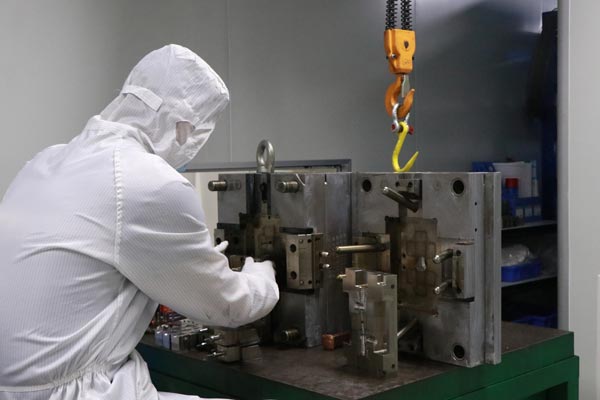
Fitting Assembly Method: Fine Adjustments for Perfect Fit
The fitting assembly method means that all relevant plastic mold parts are manufactured according to economic precision. During assembly, a specific amount of reserved fitting allowance on certain parts is finely adjusted according to actual requirements to ensure assembly accuracy. In mold manufacturing, due to factors such as part machining errors and thermal deformation, even if parts are manufactured according to economic precision, they may not fully meet the accuracy requirements during assembly. At this time, through the fitting assembly method, appropriate adjustments, such as grinding and filing, are made to key parts to eliminate the gaps and errors between parts, enabling tight cooperation among mold components and thus improving the assembly accuracy and performance of the mold. This method requires operators to have high skill levels and rich experience to accurately judge the fitting parts and the degree of adjustment.
Adjustment Assembly Method: Flexible Adjustments for Precise Assembly
The adjustment assembly method refers to manufacturing all relevant mold parts according to economic precision and achieving the required assembly accuracy by changing the relative positions of adjustable parts in the plastic mold or using appropriate adjusting parts during assembly. This method offers great flexibility and can dynamically adjust the mold according to actual conditions. For example, by adjusting adjusting bolts, shims, and other adjusting parts, the gap and positional relationship between mold parts can be changed to meet different assembly accuracy requirements. The adjustment assembly method is suitable for molds with high assembly accuracy requirements and where the relative positional relationship between parts needs to be frequently adjusted, improving the adaptability and reliability of the mold.
In conclusion, plastic mold factories can effectively ensure the assembly accuracy of plastic molds through the four methods of interchangeable assembly, selective assembly, fitting assembly, and adjustment assembly, laying a solid foundation for producing high-quality plastic products.