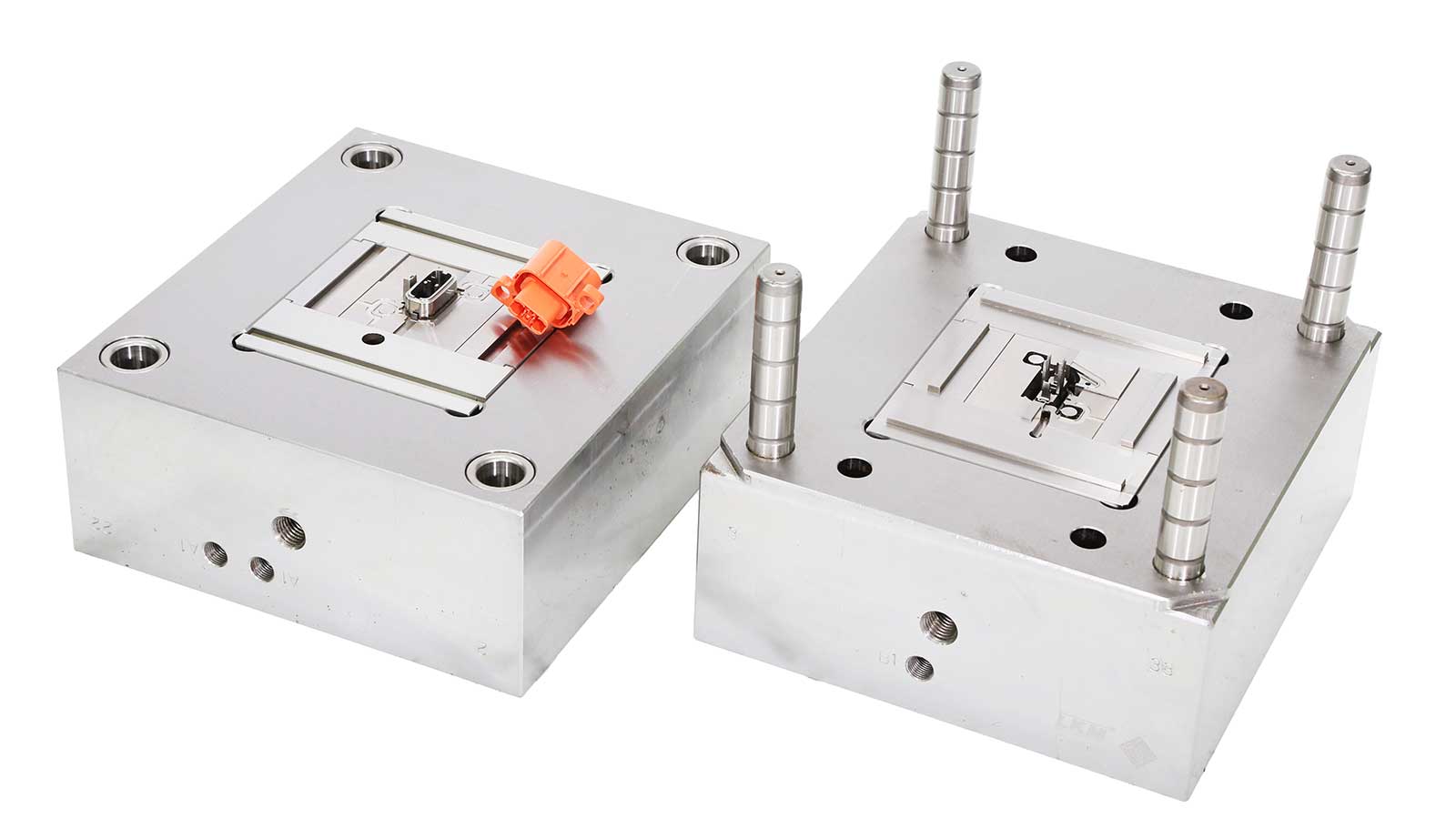

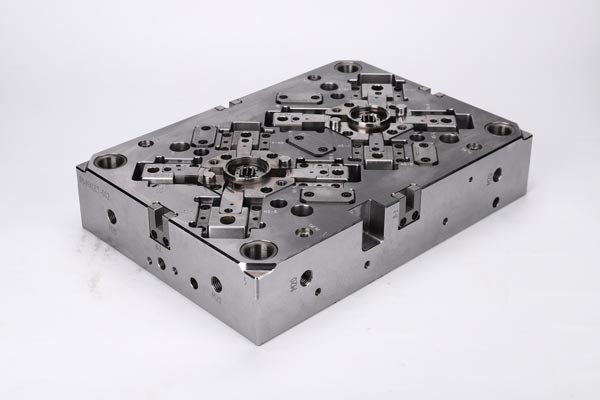
In the design process of plastic molds, optimizing strength and rigidity is of utmost importance. When the mold cavity is filled instantaneously, the working pressure of the melt reaches a certain value. At this time, the outer wall of the mold cavity must have sufficient thickness to withstand the high pressure generated during melt filling. If the strength is insufficient, the mold may undergo plastic deformation or even crack. If the rigidity is inadequate, significant elastic deformation will occur, leading to large gaps on the contact or mating surfaces of the molding components. This will result in flash or burrs, reducing the precision of plastic products and affecting their demolding. Therefore, taking effective measures in structural design to enhance the strength and rigidity of plastic molds is crucial for ensuring mold performance and product quality. The following will introduce some practical optimization tips in detail:
I. Reasonable Layout of Force-Bearing Structures
- Shorten the Distance between the Force-bearing Point and the Support Point: Avoid having the force-bearing point and the support point too far apart. This can effectively reduce the bending moment generated when the mold is under force, lowering the risk of bending deformation and thus improving the mold’s rigidity.
- Optimize Cantilever Structures: Minimize the use of cantilever structures. If they must be used, shorten the length of the cantilever. Cantilever structures are prone to significant deformation under force. Shortening their length can effectively enhance the mold’s rigidity and ensure its stability during operation.
II. Make Full Use of Load Characteristics
- Attach Importance to the Beneficial Effects of Working Loads: Do not overlook the potentially beneficial effects of working loads. In some cases, rational utilization of working loads can improve the force-bearing state of the mold and enhance its strength and rigidity. For example, by rationally designing the mold structure, the stress generated by the working load can partially offset the mold’s own stress, thereby improving the overall performance of the mold.
- Avoid Friction-based Force Transmission for Components under Vibration Loads: For components subject to vibration loads, avoid using friction-based force transmission. Vibration loads can cause changes in the frictional force between components, leading to unstable force transmission, which may result in component loosening, wear, and other issues, thereby affecting the mold’s strength and rigidity. More reliable connection methods such as key connections and pin connections can be used to transmit vibration loads.
III. Eliminate Unfavorable Factors in the Structure
- Avoid Non-interacting Forces in the Structure: In mold structural design, ensure that the forces between components are reasonable and avoid non-interacting forces. Non-interacting forces increase the additional load on the mold, reduce its strength and rigidity, and may also lead to fatigue damage of the mold. By accurately calculating and analyzing the force-bearing situation of the mold, optimize the structural design to eliminate non-interacting forces.
- Diversify Force Transmission Methods: Avoid considering only a single force transmission method. A single force transmission method can cause concentrated forces in the mold, leading to excessive local stress and reducing the mold’s strength and rigidity. Combining multiple force transmission methods, such as using both bending and tensile force transmission simultaneously, can make the force distribution in the mold more uniform and improve its overall performance.
- Avoid Compressive Stress in Thin Rods: Thin rods are prone to buckling instability under compressive stress, so it is necessary to avoid thin rods bearing compressive stress as much as possible. If it is unavoidable, measures such as increasing the cross-sectional dimensions of the thin rod or setting up support structures can be taken to improve its stability and ensure the mold’s strength and rigidity.
IV. Pay Attention to the Stress State of Components
- Control the Rigidity of Components under Impact Loads: Components subject to impact loads should not have excessive rigidity. Components with excessive rigidity will generate significant stress concentration when subjected to impact, which can easily lead to component damage. The structure and material of the components should be rationally designed to give them a certain degree of flexibility, enabling them to absorb and disperse impact energy, reduce stress levels, and improve the mold’s impact resistance.
- Ensure the Surface Quality of Components under Stress: The surfaces of components under stress should avoid excessive roughness or scratches. Rough or scratched surfaces can become areas of stress concentration, reducing the fatigue strength and stress corrosion resistance of the components. During the machining process, strictly control the surface quality of the components and use appropriate machining processes and surface treatment techniques to improve the surface smoothness and hardness of the components.
- Eliminate Residual Tensile Stress on the Surfaces of Components under Stress: The surfaces of components under stress should avoid having residual tensile stress. Residual tensile stress reduces the fatigue life and crack propagation resistance of the components, making them prone to fracture during use. Residual tensile stress on the component surfaces can be eliminated through processes such as heat treatment and shot peening to improve the strength and reliability of the components.
V. Optimize Local Structures and Installation Processes
- Arrange the Spacing of Local Structures Reasonably: Avoid having local structures that affect strength too close to each other. Close local structures can cause the superposition of stress concentrations, reducing the overall strength of the mold. During the design process, according to the force-bearing situation and material properties of the mold, rationally arrange the positions and spacing of local structures to ensure the mold’s strength and rigidity.
- Avoid the Same Direction of Pre-deformation and Working Load-induced Deformation: During mold design and use, prevent the pre-deformation and the deformation caused by the working load from having the same direction. If they have the same direction, it will aggravate the degree of mold deformation, affecting the mold’s precision and service life. The mold structure and pre-deformation method can be rationally designed to make the pre-deformation and the deformation caused by the working load offset or reduce each other.
- Leave a Margin at the Connection between the Steel Wire Rope and the Wire Rope Drum during Hoisting: During hoisting, leave a certain margin at the connection between the galvanized steel wire rope and the wire rope drum. This can prevent the steel wire rope from breaking or the drum from being damaged due to excessive force at the connection during hoisting, ensuring the safety and reliability of the hoisting process and also protecting the mold structure from damage.
- Reduce the Additional Force Caused by Misalignment of the Installation Centerline: During mold installation, try to minimize the occurrence of misalignment of the centerline. Misalignment of the centerline generates additional forces and moments, increasing the load on the mold and reducing its strength and rigidity. Before installation, accurately measure and adjust the components of the mold to ensure the accurate alignment of the installation centerline.