



In the debugging process of the gas-assisted injection molding process for precision injection molds, numerous factors need to be carefully controlled. A slight oversight can affect product quality and production efficiency. The following will elaborate in detail on several key aspects that require special attention during debugging:
I. Gas Inlet Balance Issues with Gas Needle-Type Control Panels
For precision injection molds using gas needle-type control panels, when air is pressed into the gas needles, an imbalance in the gas inlets is highly likely to occur, which significantly increases the difficulty of adjustment. The typical manifestation of this imbalance is product shrinkage. To effectively solve this problem, during the air release operation, it is essential to carefully check the smoothness of gas flow to ensure that the gas can enter the mold evenly and steadily, thereby avoiding product defects caused by uneven gas inlets.
II. Precise Temperature Control of Plastic Granules
The temperature of plastic granules is one of the crucial factors influencing the smooth progress of the injection molding production of precision injection molds. Gas-assisted products are extremely sensitive to the temperature of plastic granules. If the nozzle temperature is set too high, the product is prone to defects such as material splashes and scorching. Conversely, if the material temperature is too low, problems like cold glue, cold nozzle, and blocked gas needles may occur. The main manifestations on the product are abnormal shrinkage rates accompanied by material splashes. To address these issues, it is necessary to regularly check whether the temperature of the plastic granules is within a reasonable range. Based on the characteristics of different plastic granules and product requirements, precisely adjust the temperature parameters to ensure the stability of the injection molding process and the consistency of product quality.
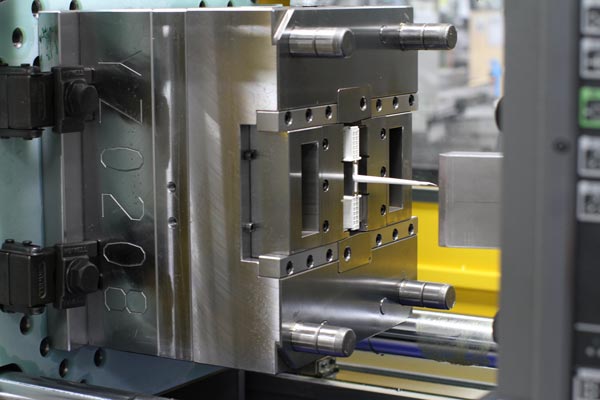
III. Manual Inspection of Material Overflow at Sealed Needle-Type Nozzles
During manual operation, it is crucial to carefully check whether there is any material overflow when regenerating material at sealed needle-type nozzles. If material overflow is observed, it indicates that the gas-assisted sealing needle fails to effectively seal the nozzle. During the gas injection process, high-pressure gas will flow back into the material pipe, causing a series of problems, such as large-scale material splashes and scorching at the sprue, a significant reduction in the regeneration time of the material, and the release of gas when the sealing needle is opened. To solve this problem, it is necessary to precisely adjust the length of the sealing needle support rod to ensure that the sealing needle can tightly seal the nozzle, preventing the backflow of high-pressure gas and ensuring normal production.
IV. Sensitivity Detection of Gas-Assisted Sensors
Gas-assisted sensors are important components in the gas-assisted injection molding process, and their sensitivity directly affects the safe and stable operation of the mold. If the sensitivity of the gas-assisted sensor is insufficient and it fails to accurately and timely perceive changes in the internal state of the mold, the mold may suffer unnecessary damage, affecting its service life and production efficiency. Therefore, during the process debugging, it is necessary to regularly detect the gas-assisted sensor to ensure that its sensitivity meets the requirements and to promptly identify and eliminate potential safety hazards.
V. Reduction Strategy for Material in Gas-Assisted Products with Shrinkage
Gas-assisted products mainly rely on gas for pressure maintenance. When the product shows signs of shrinkage, a appropriate amount of material reduction can be considered. The main purpose of material reduction is to reduce the internal working pressure and space of the product, allowing the gas to more easily penetrate into areas with thicker material layers and apply sufficient pressure, thereby effectively improving the product’s shrinkage problem. When implementing the material reduction strategy, it is necessary to reasonably control the amount of material reduction according to the specific structure and shrinkage situation of the product to avoid other defects caused by excessive material reduction.
The debugging of the gas-assisted injection molding process for precision injection molds is a complex and meticulous process. Operators need to have rich professional knowledge and practical experience to comprehensively and carefully control and adjust the above key factors. Only in this way can the smooth implementation of the gas-assisted injection molding process be ensured, and high-quality gas-assisted products be produced.