


Precautions during the Production Process
Precise Temperature Control of the Mold
The mold temperature is closely related to the properties of the plastic materials used and must be strictly and precisely controlled. Before production starts, the accuracy of the temperature controller should be regularly calibrated to provide reliable temperature references for subsequent production. During production, dedicated personnel should be arranged to continuously monitor the working status of the instrument to ensure its normal display. At the same time, it is necessary to check whether the cooling channels are unobstructed and in good operating condition. Only in this way can the temperature of the precision injection mold be kept under precise control, thereby ensuring the molding quality of the products.
Proper Removal of Molded Products
Depending on the size of the plastic products, there are three main methods for removing molded products: automatic ejection, manual removal, and removal by robotic arms. Regardless of the method used, the key is to ensure that the molded parts and the gating system materials are completely removed. This is especially crucial when the injection molding machine is in fully automatic operation. In such cases, the successful removal of the molded parts must be set as a necessary condition for the injection molding machine to enter the next working cycle. This is because if any molded parts remain in the injection mold and the injection molding machine proceeds with the next clamping action, in most cases, it will cause damage to the injection mold and may even lead to severe deformation of the precision injection mold, affecting its normal use and subsequent production.
Real-time Monitoring of the Mold’s Working Status
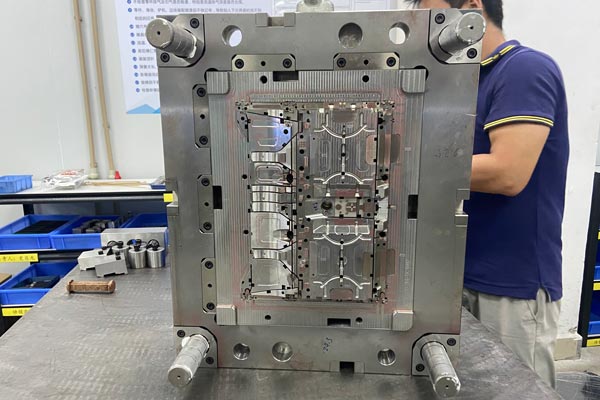
During the production process, professional personnel should be assigned to continuously monitor the working status of the precision injection mold. Focus on checking whether the mold’s movement sequence is correct, whether the starting and stopping positions, positioning, and clamping actions of the core-pulling slides are accurate and reliable. At the same time, closely observe whether there is severe wear on the sliding and guiding parts of the mold, and whether the ejector pins and return strokes are stuck, broken, or experiencing不畅 (smooth) movement. Once any abnormalities are detected, the production should be stopped immediately for handling to prevent further deterioration and greater damage to the mold.
Precautions after Production Completion
Comprehensive Cleaning of the Mold
During the injection molding process, flash and material carbonization products generated by the plastic products often remain in the cavity of the precision injection mold. If these impurities are not cleaned in a timely manner, they will not only affect the precision and service life of the mold but also have a negative impact on the quality of the products produced in subsequent production. Therefore, after production is completed, the cavity of the injection mold must be thoroughly cleaned to ensure that there are no residual impurities.
Effective Rust Prevention for the Mold
Some plastic materials produce corrosive gases when they decompose due to overheating, which can easily cause rusting of the precision injection mold. To prevent rusting, after stopping injection molding operations, the precision injection mold should be immediately wiped clean with a clean and soft cloth, and then the mold should be closed. If the mold will be out of use for an extended period, in addition to wiping the cavity, a rust inhibitor should be sprayed. After closing the injection mold, grease should be applied to key parts, and the gate should be plugged to enhance the mold’s rust prevention ability and extend its service life.
Standardized Storage of the Mold
After the production of plastic products is completed, before storing the precision injection mold, it should be thoroughly cleaned. Then, a comprehensive and detailed inspection should be carried out on the cavity surface, key dimensional parts, moving parts, and positioning to ensure that the mold is intact. After confirmation, a rust inhibitor should be applied, and then the precision injection mold should be stored in the warehouse according to standardized procedures. During storage, appropriate environmental conditions should be provided for the mold to prevent it from being affected by adverse factors such as moisture and high temperatures.