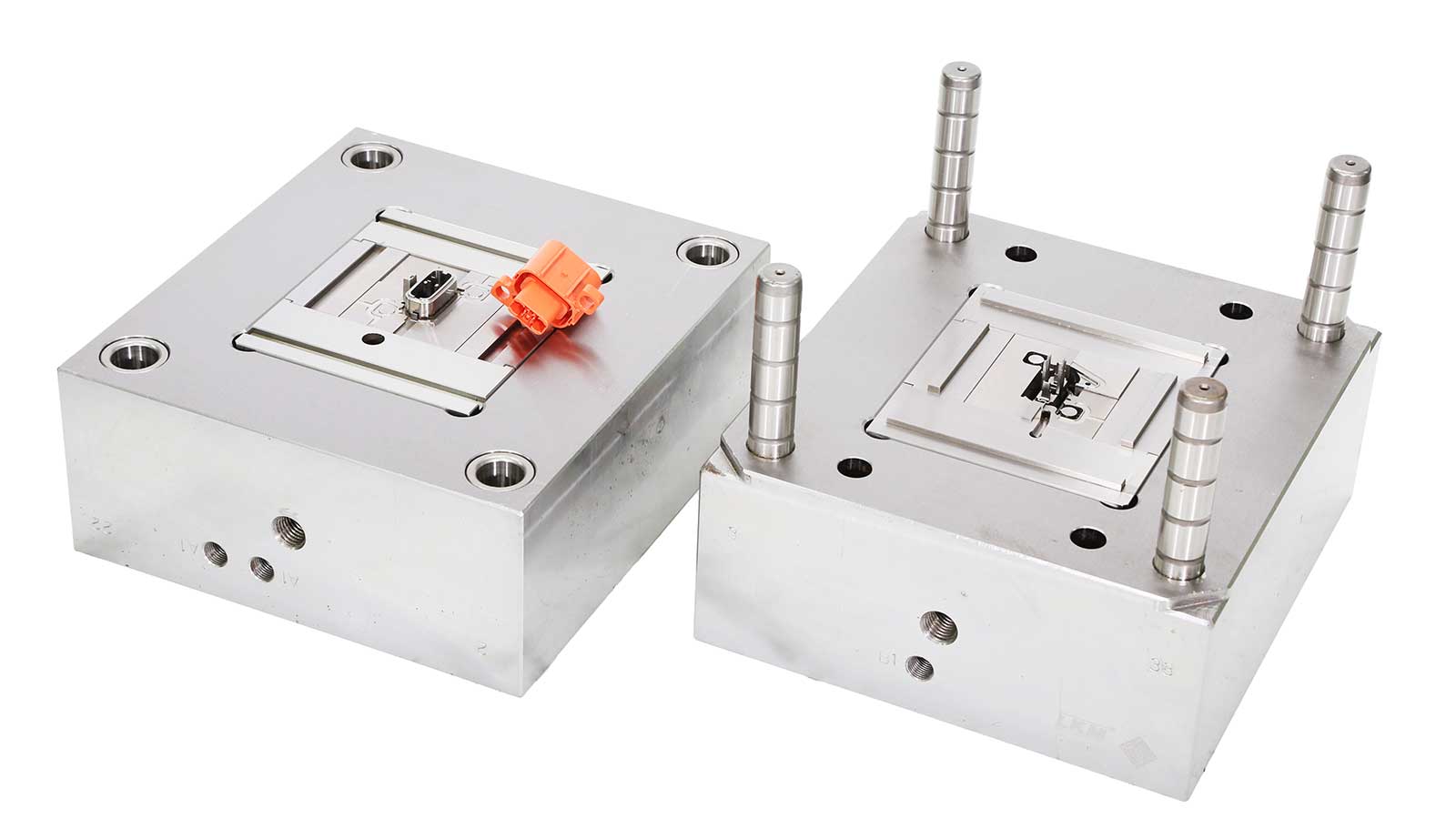

In the fiercely competitive plastic product market, the appearance quality of products has become a key factor in attracting consumers’ attention and enhancing brand competitiveness. If you want to make the appearance of plastic parts more exquisite and unique, adding text and patterns on their surfaces is an effective approach. Common processing methods include silk-screen printing and lettering in the cavity of injection molds, and lettering in the injection mold cavity is highly favored in the industry due to its advantages such as achieving permanent marking and improving product texture. So, how exactly is lettering carried out during the processing and manufacturing of injection molds? Below, we will introduce three commonly used lettering methods in detail.
1. Engraving Machine Engraving Method
When the size of the text or pattern is relatively large, engraving machine engraving is a commonly used processing method. Its principle is to use the precise tool movement of the engraving machine to directly engrave the required text or pattern on the surface of the injection mold.
However, this processing method has certain limitations. Due to the physical action of the engraving machine’s tool, obvious tool marks are usually left on the surface of the directly engraved text. This not only affects the aesthetic appearance of the mold but may also have an adverse impact on the subsequent injection molding quality. Therefore, after the engraving is completed, additional polishing treatment is required for the injection mold to eliminate the tool marks and achieve a smooth and flat surface, ensuring the appearance quality of the injection-molded plastic parts.
2. Laser Engraving Method (Etching Method)
Laser engraving uses a high-energy-density laser beam to ablate the surface of the injection mold, leaving traces to form text or patterns. This processing method is also known as etching.
Laser engraving has significant advantages. Its processing speed is extremely fast, enabling it to complete the lettering tasks of a large number of molds in a short time and greatly improving production efficiency. However, it also has obvious drawbacks. The laser ablation process leaves processing traces on the mold surface, which may affect the accuracy and surface quality of the mold and, in turn, have an impact on the molding effect of the plastic parts. Therefore, laser engraving is generally suitable for the processing and manufacturing of ordinary small and medium-sized injection molds. For molds with extremely high requirements for accuracy and surface quality, this method should be chosen with caution.

3. Electrode Engraving and Electrical Discharge Machining Method
The electrode engraving and electrical discharge machining method is a relatively complex but highly accurate lettering method. The specific operation process is as follows: First, remove a piece of electrode material from the part of the mold where the text needs to be processed; then, use a precision engraving device to finely engrave this electrode to form a shape opposite to the required text or pattern; finally, install the engraved electrode on an electrical discharge machine. Through the electrical discharge between the electrode and the mold, the high temperature generated by the electrical discharge melts and vaporizes the mold surface material, leaving precise text or patterns on the surface of the injection mold.
This method can achieve high-precision lettering effects and is especially suitable for the processing and manufacturing of injection molds with extremely high requirements for the accuracy of text or patterns. However, due to its complex processing process involving multiple links and precision equipment, the processing cost is relatively high, and the processing cycle is also relatively long.
The above three methods are commonly used lettering techniques in injection mold processing and manufacturing factories. In actual production, enterprises should comprehensively consider factors such as the specific requirements of the mold, production volume, and cost budget to select the most appropriate processing method to ensure that the lettering quality of the injection mold meets the product requirements and maximize production benefits.
FAQ
Q1: Is the engraving machine engraving method suitable for text and patterns of all sizes?
A1: Not really. The engraving machine engraving method is usually suitable for relatively large text or patterns. For small-sized text and patterns, due to the precision limitations of the engraving machine’s tool, it may be difficult to achieve the desired processing effect, and the difficulty of dealing with surface tool marks will also increase.
Q2: Can the processing traces left by laser engraving be eliminated through subsequent treatment?
A2: It is difficult to eliminate the processing traces left by laser engraving. Although some surface treatment processes, such as sandblasting and polishing, can be used to improve the surface quality of the mold to a certain extent, they cannot eliminate the traces and may have an impact on the accuracy of the mold. Therefore, when choosing the laser engraving method, the potential impact on product quality should be fully considered.
Q3: What factors mainly affect the processing cost of the electrode engraving and electrical discharge machining method?
A3: The processing cost of the electrode engraving and electrical discharge machining method is mainly affected by factors such as the cost of electrode materials, the precision of engraving equipment, processing time, and the performance of the electrical discharge machine. The choice of electrode materials directly affects the cost. High-precision and high-performance engraving equipment and electrical discharge machines are usually more expensive, increasing the equipment depreciation cost. The length of processing time is related to the complexity of the text or pattern and the accuracy requirements, and the longer the processing time, the higher the cost.
Q4: How can I determine which lettering method is most suitable for my injection mold?
A4: To determine the most suitable lettering method, multiple factors need to be considered comprehensively. First, determine the feasibility of the processing method according to the size, shape of the mold, and the size and complexity of the text or pattern to be engraved. Second, consider the production volume. For mass production, processing methods with fast processing speed and low cost should be given priority. Third, combine the quality requirements of the product, such as the requirements for surface accuracy and smoothness. Finally, consider the enterprise’s equipment conditions and technical level to ensure that the selected processing method can be implemented smoothly.