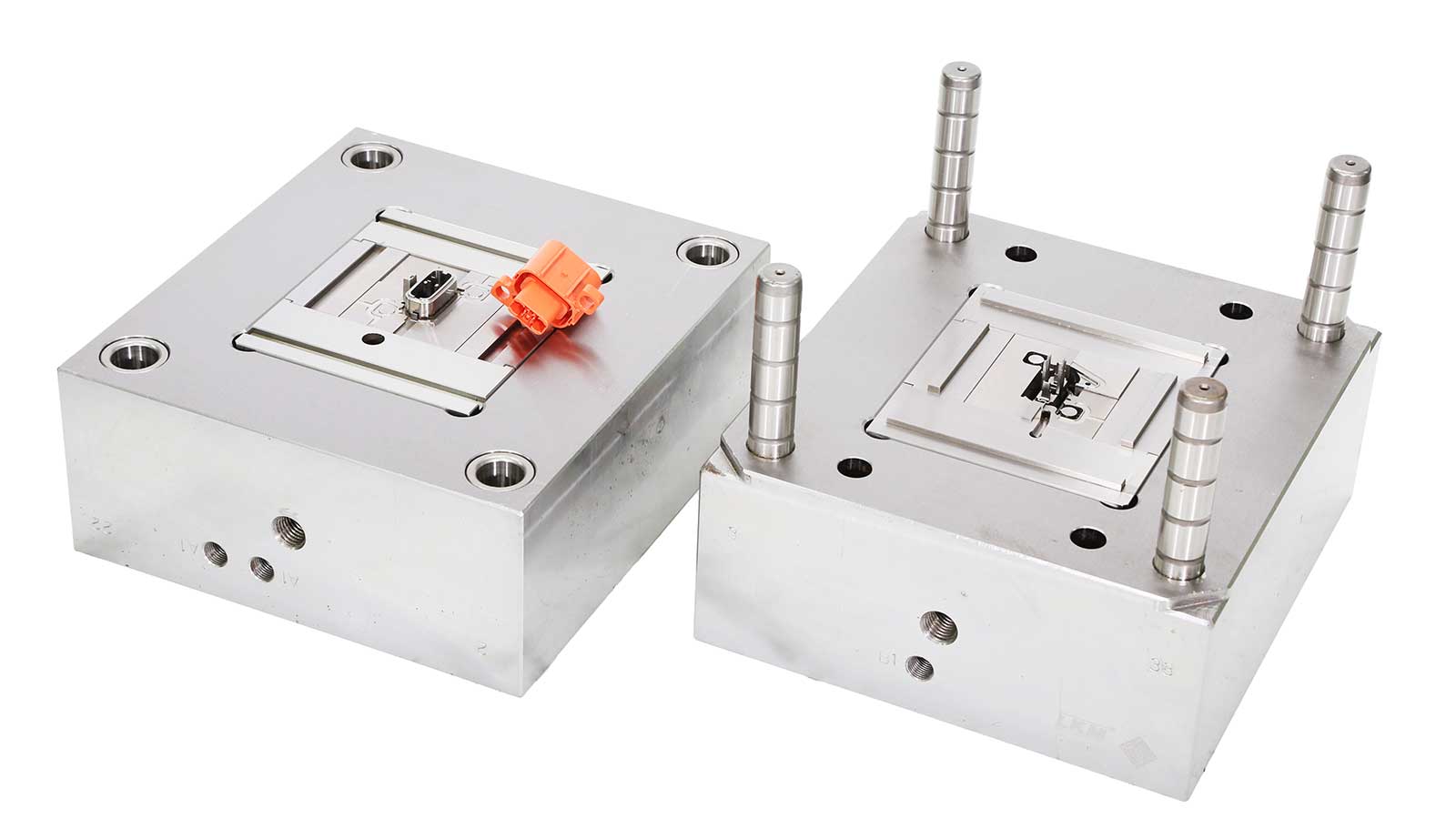
In the field of precision injection mold manufacturing, runner design is a crucial link. It is like the veins in a precision machine, directly related to the quality of injection-molded products, production efficiency, and cost control. Reasonable and scientific runner design can ensure the smooth flow of molten plastic in the mold and accurately fill the cavities, thus creating precision injection-molded parts that meet high standards. Below, the design points of the main runner and the sub-runner will be elaborated in detail.
1. Design Points of the Main Runner in Precision Injection Molds
The main runner serves as the “first-stop channel” for molten plastic to enter the mold cavities. Usually, it is set on the center line of the mold. This layout is not arbitrary but has been carefully considered. The center-line position enables the molten plastic to be evenly stressed when entering the mold, laying a foundation for subsequent stable flow.
The diameter size of the main runner is a key factor affecting the injection process. It directly influences the injection pressure, flow rate, and filling time of the molten plastic. If the diameter is too large, the pressure loss of the plastic during flow will be small, but it may lead to an excessively long injection time, increasing the production cycle. Conversely, if the diameter is too small, the injection pressure will increase, the plastic flow will be obstructed, and there may even be a situation where the cavities are not fully filled, affecting product quality.
To facilitate the processing of precision injection molds, the main runner is generally not directly made on the fixed mold but cleverly utilizes a sprue bush. The sprue bush is like the “outer garment” of the main runner, which is not only convenient for processing and replacement but also protects the mold. When determining the length of the sprue bush, it should be made as short as possible. An overly long sprue bush will increase the pressure loss of the plastic melt during flow, causing the plastic to flow unevenly. At the same time, it will also generate more waste materials and increase manufacturing costs. Therefore, reasonably controlling the length of the sprue bush is a detail that cannot be ignored in main runner design.
2. Design Points of the Sub-Runner in Precision Injection Molds
The sub-runner plays the role of “diverting and guiding” in precision injection molds. It is responsible for smoothly introducing the molten plastic from the main runner into the feed gates of each mold cavity. Through changes in the runner cross-section and direction, it achieves a reasonable distribution of the plastic, ensuring that each cavity is evenly filled.
The following are the design points of the sub-runner:
1. Cross-Sectional Area Optimization
Under the premise of meeting the injection molding process requirements of precision injection molds, the cross-sectional area of the sub-runner should be as small as possible. A smaller cross-sectional area helps reduce the residence time of the plastic in the sub-runner, lowering the risk of plastic degradation due to prolonged heating. At the same time, it can also reduce the amount of plastic used and lower production costs. However, the cross-sectional area should not be too small; otherwise, it will increase the flow resistance of the plastic and affect the filling effect.
2. Rational Distribution
The distribution of the sub-runner and the cavities should follow the principles of compact arrangement and reasonable distance. It is preferable to adopt an axial or central symmetric layout. This layout can balance each runner, ensuring that the molten plastic enters each cavity simultaneously and evenly, and minimizing the total area of the molding region. In this way, it can not only improve production efficiency but also ensure the stability of product quality.
3. Length Control
The length of the sub-runner should be as short as possible. A long sub-runner will increase the flow path of the plastic, leading to greater pressure loss, slower flow rate, and even the possibility that the plastic will cool and solidify prematurely during flow, affecting the filling quality. Therefore, when designing the sub-runner, the mold structure should be optimized to shorten its length as much as possible.
4. Turning Treatment
In the design process of the sub-runner, turning situations are inevitable. In this case, the number of turns should be minimized as much as possible. Excessive turns will increase the complexity and resistance of plastic flow, affecting the flow stability of the plastic. At the turning points, a smooth transition design should be adopted to avoid sharp corners. Sharp corners are prone to stress concentration, causing the plastic to flow unevenly and even leading to problems such as plastic scorching.
5. Surface Roughness Requirements
The inner surface roughness of the sub-runner is generally selected as Ra1.6. An appropriate surface roughness can reduce the friction between the plastic and the inner wall of the sub-runner, making the plastic flow more smoothly. At the same time, it can also reduce the heat loss of the plastic during flow, which is beneficial for improving the quality and efficiency of injection molding.
In conclusion, the runner design of precision injection molds is a comprehensive project. It is necessary to comprehensively consider multiple factors and continuously optimize design parameters to achieve efficient and high-quality injection molding production.