



What Are Process Threads
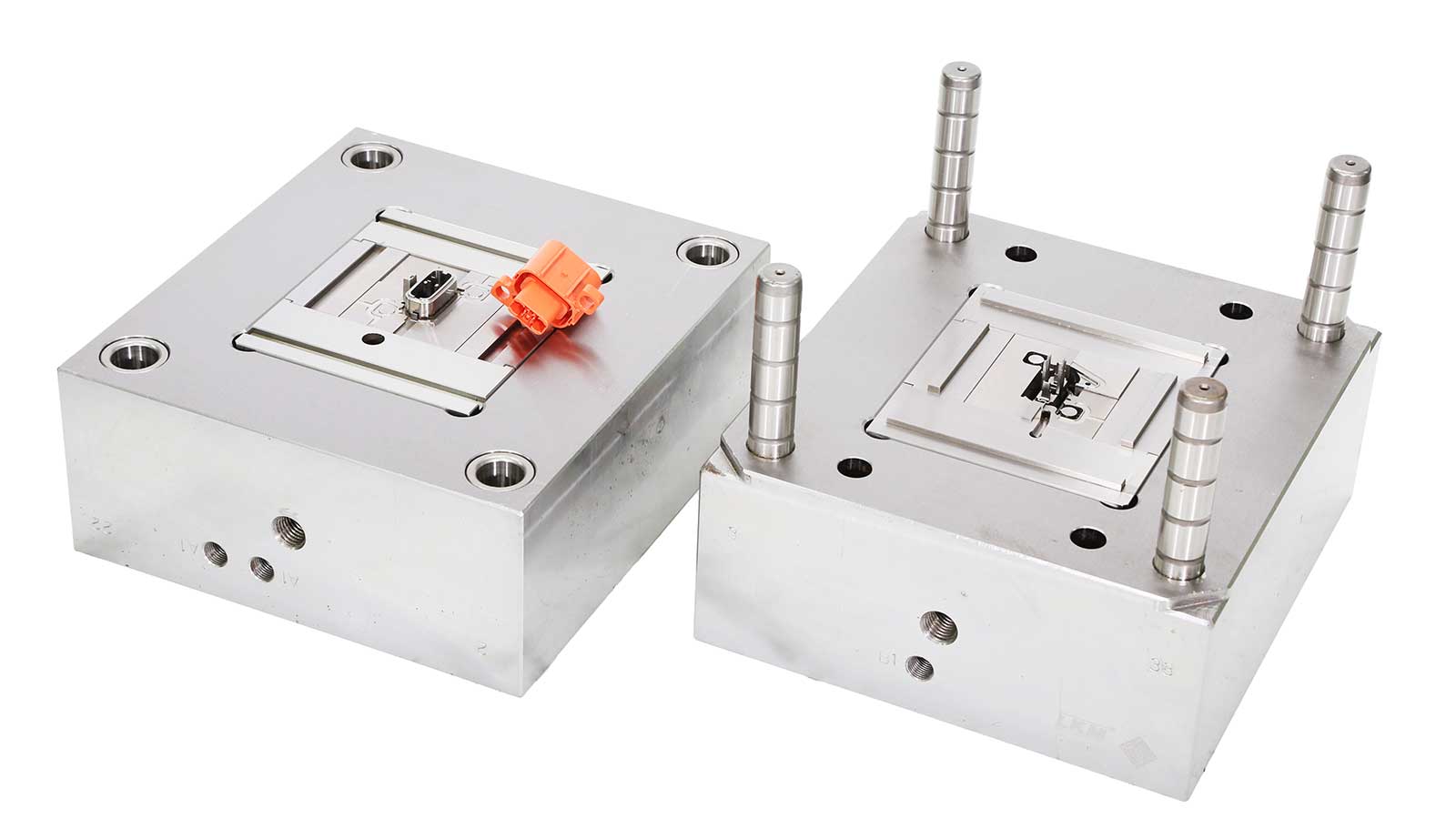
In the field of injection mold manufacturing, process threads (also known as process holes or process threaded holes) refer to dedicated adjustment holes or threaded holes machined on non-functional mold components. Their core purpose is not for product molding but to provide convenient access channels during mold assembly, commissioning, and maintenance, thereby streamlining the manufacturing process and improving assembly efficiency. The design of process threads reflects the mold engineer’s in-depth consideration of operability and maintainability in practice.
Typical Application Scenarios of Process Threads
Scenario One: Quick Adjustment of Angled Ejector Shoe Tightness
In injection molds equipped with angled ejector pins on the fixed mold side, the tightness of the angled ejector shoe directly affects product demolding quality and mold service life. In actual production, whether during the mold installation phase or subsequent processing and maintenance, the tightness of the angled ejector shoe must be precisely adjusted.
According to the conventional operation procedure, technicians need to first remove the moving mold base plate as a whole, then adjust the angled ejector shoe, and reinstall the moving mold base plate after confirmation. This process is not only time-consuming but repeated disassembly and reassembly may also affect the assembly precision of the mold.
To completely resolve this pain point, experienced mold engineers will drill a process hole with a diameter slightly larger than the locking screw head on the moving mold base plate, at the position corresponding to the locking screw of the angled ejector shoe. Through this process hole, technicians can directly fine-tune the tightness of the angled ejector shoe without disassembling the moving mold base plate, significantly improving assembly and maintenance efficiency.
Scenario Two: Convenient Pre-Loading of Return Pins
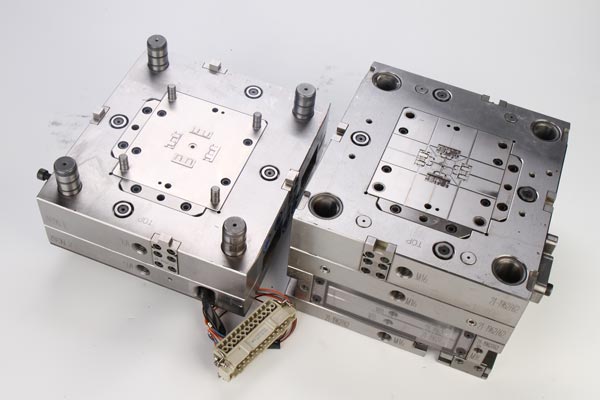
In the vast majority of injection molds, return pins are equipped with return springs. Because the return spring has a certain amount of pre-stretch when fully reset, when installing ejector pins or fixed mold angled ejector shoes, a dedicated fixture is required to press the ejector plate back toward the fixed mold plate by a specific distance to ensure all components are properly assembled.
However, on production floors with limited fixture resources, this method of operation can be quite inconvenient. To address this, a process thread solution can be adopted: machine process threaded holes on the inner bores of the two return pins at the top corners, and use socket head cap screws through cylindrical support brackets to pull the return pins together with the ejector plate toward the fixed mold plate. After all ejector pins and angled ejector shoes are installed, simply loosen the screws to allow the ejector plate to return to its original position automatically. This solution is simple to operate, highly practical, and effectively reduces dependence on dedicated fixtures.
Core Value of Process Thread Design
Process threads are essentially an engineering optimization approach oriented toward manufacturing and maintenance. Although they do not directly participate in product molding, they can bring significant value to mold projects at the following three levels:
First, reducing assembly steps and shortening mold commissioning cycles.
Second, lowering dependence on dedicated fixtures and saving production costs.
Third, improving mold maintainability and facilitating later-stage servicing and part replacement.
In high-end medical injection molds and precision electronic mold projects, the proper use of process threads has become one of the important indicators for evaluating mold design quality.
FAQ
Q: Do process threads affect the structural strength of the mold?
A: Process threads are typically machined in non-load-bearing areas of the mold. The hole diameter and depth are precisely calculated, and their impact on the overall structural strength of the mold is negligible. However, during design, care should still be taken to avoid drilling process holes in high-stress areas.
Q: Should process threads be specially marked on the mold drawings?
A: It is recommended that the position, dimensions, and purpose of process threads be clearly marked on the mold design drawings, and separately explained in the processing instruction card, to prevent them from being overlooked during machining as redundant features.
Q: Is the process thread solution applicable to all types of injection molds?
A: Process threads are not a universal solution. Their applicability depends on the specific structure and assembly requirements of the mold. For molds with simple structures and few assembly steps, the necessity of process threads is relatively low. However, for molds featuring angled ejector pins and complex return mechanisms, process threads can deliver noticeable efficiency improvements.