

In the plastic mold industry, the packaging process not only affects transportation safety but also directly influences customer experience and brand image. The packaging system of plastic mold manufacturers is typically divided into two major categories: mold packaging and plastic product packaging. This article systematically outlines the applicable scenarios, technical key points, and industry standards of various packaging methods from a professional perspective.
1. Mold Packaging Methods
1. Simple Packaging — Stainless Steel Wire Strapping
This is the most basic form of mold packaging, which involves strapping a loop of stainless steel wire around the mold to prevent the mold from loosening during transportation due to vibration.
- Applicable Scenarios: Short-distance transportation, domestic routine orders, non-precision molds
- Advantages: Simple operation, low cost, fast turnover
- Limitations: Limited anti-collision capability; risk of bumps during long-distance or export transportation
📌 Industry tip: Even when using simple packaging, it is recommended to add shock-absorbing materials to critical mold parts to reduce transportation damage.
2. Standard Packaging — Wooden Crate Encapsulation
Wooden crate packaging is currently the most mainstream and reliable packaging method for mold transportation. The specific practice is to customize a dedicated wooden crate, securely place the mold inside the crate, fill the surrounding area with shock-absorbing and cushioning materials, and then seal and ship.
- Applicable Scenarios: Long-distance transportation, precision molds, export orders
- Core Advantages:
- Comprehensive anti-collision and shock-proof protection, effectively safeguarding mold cavities and precision structures
- Compliance with export packaging standards (e.g., ISPM 15 fumigation standard)
- Facilitates forklift loading and unloading, improving logistics efficiency
- Special Export Requirements: Export mold wooden crates must undergo fumigation treatment and be stamped with the IPPC mark. Some customers also require packaging inspection reports
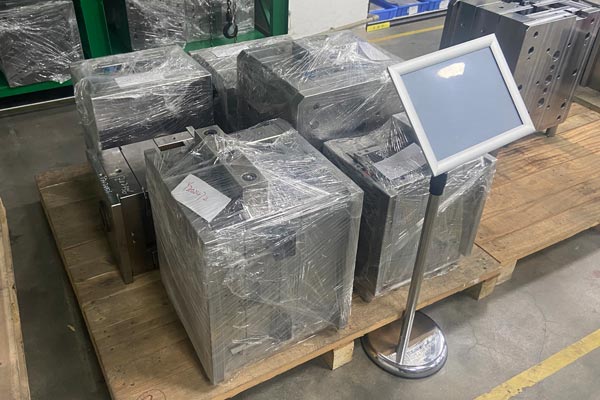
3. Pallet Packaging (Less Common)
Some manufacturers use wooden or plastic pallets to carry molds for shipment. However, due to the irregular shape of molds and significant weight differences, this method is not widespread in the industry and is typically only used for highly standardized mold products.
2. Plastic Product Packaging Methods
1. General Packaging — PP Bag + Carton
This is the most commonly used product packaging solution for plastic mold manufacturers: place a specified number of plastic parts into a PP bag, then uniformly place them into a corrugated carton.
- Applicable Scenarios: Standard-size plastic parts, domestic sales orders, large-batch delivery
- Packaging Specifications: Typically 20-50 pieces per box (depending on product size)
- Cost Advantage: Low material cost and high packaging efficiency, suitable for automated production line coordination
2. Protective Packaging — Individual Bubble Wrap Wrapping
For products with high appearance requirements or that are prone to scratching (such as glossy parts and transparent parts), some customers require each product to be individually wrapped in bubble wrap before being placed into cartons.
- Applicable Scenarios: Products with high appearance requirements, export orders, automotive/medical plastic parts
- Core Value: Effectively prevents surface scratches and friction marks, enhances unboxing experience
- Cost Impact: Labor and material costs increase by approximately 30%-50% compared to general packaging
3. Pallet Packaging — Dedicated Solution for Large Parts
For large, irregular, or heavy plastic parts, manufacturers typically adopt pallet packaging: the product is fixed onto a pallet, and both the product and pallet are shipped together.
- Applicable Scenarios: Automotive bumpers, appliance housings, industrial turnover boxes, and other large plastic parts
- Packaging Key Points:
- Pallet material is usually wood or plastic, meeting load-bearing requirements
- Protective materials must be placed between the product and the pallet
- Strapping and fixing are necessary when required to prevent transportation displacement
4. Customized Packaging — Exclusive Design per Customer Requirements
For brand clients or high-end product lines, plastic mold manufacturers can customize dedicated cartons according to customer requirements, including printing logos, specifying dimensions, and adding EVA/EPE foam liners to achieve branded packaging delivery.
- Applicable Scenarios: Brand OEM, e-commerce direct delivery, retail channel products
- Industry Trend: More and more customers are incorporating packaging into their supplier audit standards; customized packaging has become a plus factor for winning premium orders
3. Packaging Method Selection Decision Reference
| Consideration Factors | Recommended Packaging Method |
|---|---|
| Domestic short-distance, cost priority | Simple packaging (wire strapping) + PP bag general packaging |
| Domestic long-distance, precision molds | Wooden crate + bubble wrap protective packaging |
| Export orders | Fumigated wooden crate + customized carton/individual bubble wrap packaging |
| Large irregular plastic parts | Pallet packaging + shock-proof fixing |
| Brand clients/high-end products | Customized carton + individual protective packaging |
4. Industry Best Practice Recommendations
- Establish Packaging SOPs: Develop standardized packaging work instructions for different product lines to ensure shipment consistency
- Normalize Packaging Testing: Regularly conduct drop tests and vibration tests to verify packaging protection effectiveness
- Collaborate with Logistics for Optimization: Dynamically adjust packaging levels based on transportation distance and method (ocean/air/land)
- Focus on Environmental Trends: Gradually promote recyclable packaging materials to respond to ESG and customer environmental requirements
Frequently Asked Questions (FAQ)
Q1: Must molds for export be packaged in wooden crates?
A: Yes. Export molds typically require the use of fumigated wooden crates complying with the ISPM 15 standard, stamped with the IPPC mark. Some countries (such as the EU and the US) also have additional requirements for wooden crate material and fumigation certificates. It is recommended to confirm the specific packaging regulations of the destination country with the customer or freight forwarder before shipment.
Q2: How much additional cost does bubble wrap packaging add to plastic products?
A: It depends on the product size and packaging quantity. Taking a medium-sized plastic part (approximately 200g) as an example, the cost of individual bubble wrap wrapping is about 0.1-0.3 RMB per piece, with the overall packaging cost increasing by approximately 30%-50%. However, for products with high appearance requirements, this investment can effectively reduce customer complaints and return risks, making the overall cost-performance ratio still favorable.
Q3: For large plastic parts using pallet packaging, will they shift during transportation?
A: Standardized pallet packaging uses multiple measures to prevent shifting, including strapping, anti-slip pads, and limit blocks. It is recommended to choose a pallet with a load-bearing capacity of 1.5-2 times the total weight of the product, and use straps for securing during loading. If the customer has special requirements, anti-slip rubber pads can be added to the bottom of the pallet.
Q4: What is the typical minimum order quantity (MOQ) for custom packaging cartons?
A: The MOQ for custom cartons varies depending on the size and process. The MOQ for standard single-color printed cartons is usually 500-1,000 pieces, while four-color printing or special processes (such as lamination, hot stamping) may require an MOQ of 2,000 pieces or more. It is recommended to communicate with the packaging supplier in advance; some manufacturers support small-batch trial orders.