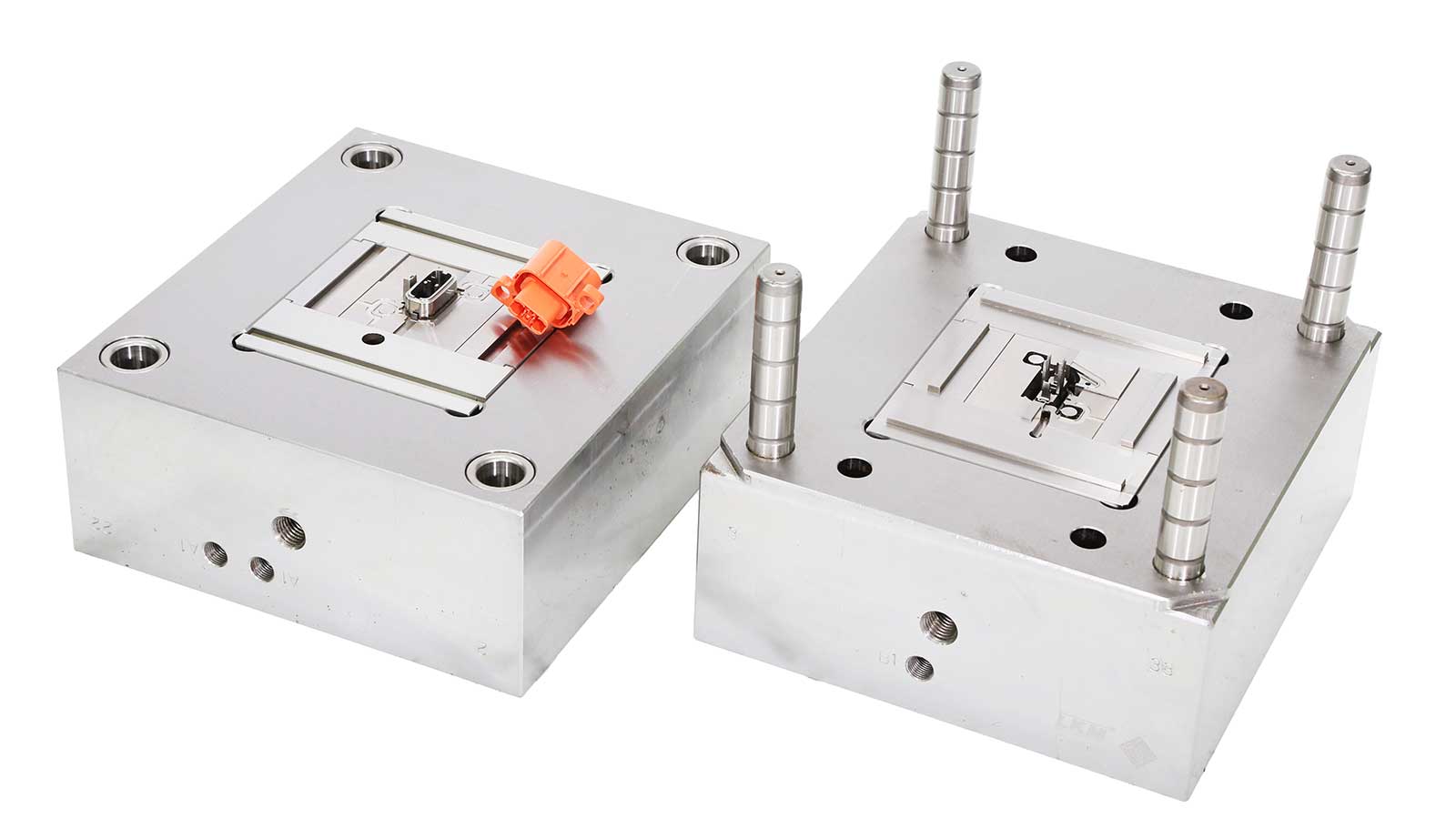



Plastic mold steel is a specialized steel grade used to manufacture cold stamping dies, hot forging dies, die-casting dies, and other core tooling. It is widely applied in mechanical manufacturing, radio instrumentation, electric motors, and electrical appliances, serving as the primary processing tool for component fabrication. The service life of mold steel directly impacts production efficiency and manufacturing costs. However, in practical applications, multiple factors can significantly shorten its operational lifespan. The following analysis systematically examines the core causes affecting the service life of plastic mold steel from four dimensions: material defects, microstructural uniformity, forging quality, and surface condition.
1. Excessive Inclusion Content in Mold Steel
Inclusions in steel are the primary source of internal cracks in plastic molds. Brittle oxides and silicate inclusions, in particular, cannot undergo plastic deformation along with the matrix during hot working. They are prone to brittle fracture under stress, forming micro-crack nuclei. These micro-cracks continue to propagate during subsequent heat treatment and service, ultimately leading to mold cracking and failure.
A representative case involves cold stamping punches made from Cr4W2MoV steel for watch component stamping. After rough machining, heat treatment, and grinding, numerous small cavities were discovered at the center of the punch heads, resulting in the rejection of the entire batch. Metallurgical analysis revealed that the steel contained a large volume of chain-distributed silicate inclusions, which flaked off during machining and formed the observed cavities.
2. Premature Failure Caused by Uneven Carbide Distribution
Ledeburite-type mold steels such as Cr12, Cr12MoV, and Cr12Mo1V1 contain a substantial amount of eutectic carbides. When the forging ratio is insufficient or the pouring temperature is improperly controlled, carbides tend to segregate into banded or network-like patterns within the steel. This uneven microstructure causes severe cracking along carbide-dense zones during quenching or allows internal cracks to propagate further during service, resulting in sudden failure.
3. Failure Induced by Poor Forging Quality
The forging quality of mold steel directly determines the service life of plastic molds. Improper heating schedules or deformation processes can cause overheating, surface cracks, internal cracks, and corner cracks. These defects reduce mold lifespan and may even lead to outright rejection. For high-carbon, high-chromium ledeburite steels, which have relatively poor thermal conductivity, excessively fast heating rates or insufficient soaking times during forging create large temperature differentials between the surface and core of the billet, generating internal cracks that are difficult to eliminate in subsequent processing.
4. Substandard Surface Quality of Mold Steel
If alloy mold steel suffers from severe surface decarburization, a residual decarburized layer will remain even after machining. During heat treatment, the mismatch between the decarburized layer and the core microstructure generates significant internal stress, directly triggering quenching cracks. Furthermore, after quenching, the surface hardness of the mold is notably lower than required, and the hardness distribution across the cross-section becomes uneven, reducing both wear resistance and fatigue strength and thereby shortening the mold’s service life.
Summary
The service life of plastic mold steel is not determined solely by the steel grade. Inclusion control, carbide uniformity, forging process quality, and surface condition are all critical and interdependent. Any negligence at any stage of material selection or processing can become the root cause of early mold failure. Enterprises should incorporate these factors into their quality management systems to safeguard mold performance from the source.
FAQ
Q: How can the impact of inclusions on mold steel service life be effectively reduced?
A: Prioritize mold steel produced via electroslag remelting or vacuum smelting processes, as these methods yield significantly lower inclusion levels than conventional smelting. Additionally, applying an appropriate forging ratio during the forging process can fracture and redistribute inclusions more uniformly, reducing their concentrated effect.
Q: Can carbide segregation be eliminated through heat treatment?
A: No, it cannot be fully eliminated. Carbide segregation is an original microstructural defect formed during the casting stage. Heat treatment can only improve the distribution morphology to a certain extent but cannot fundamentally reverse the segregation tendency. Therefore, controlling pouring temperature and forging ratio is the key to prevention.
Q: How significant is the impact of surface decarburization on mold steel service life?
A: The impact is substantial. A decarburized layer leads to insufficient surface hardness after quenching and concentrated internal stress, making quenching cracks highly likely. For molds requiring high precision and long service life, the depth of the surface decarburized layer should be controlled within the machining allowance. Otherwise, the mold’s service life will be directly and significantly shortened.