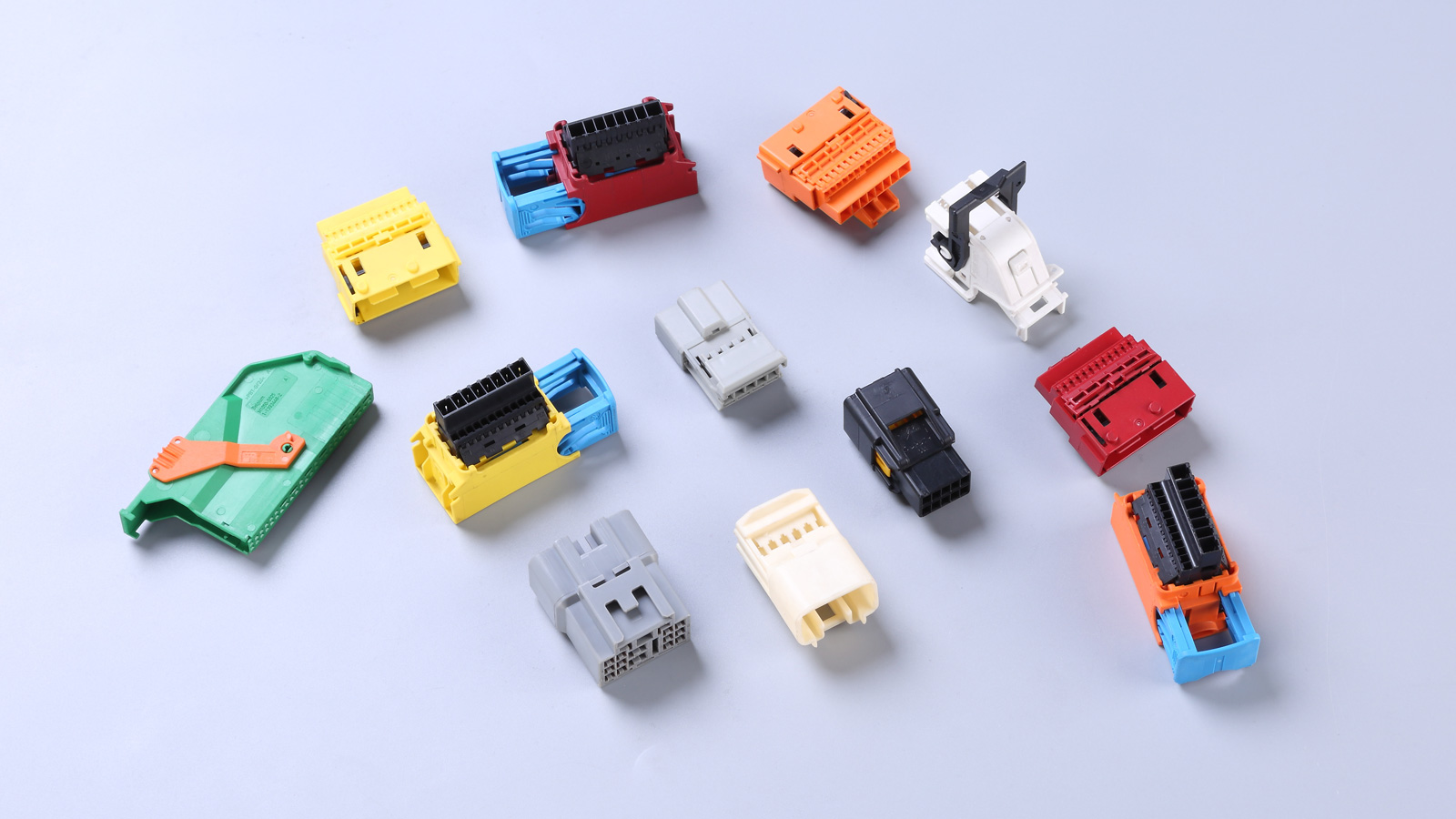



In the large-scale production process of mold processing and injection molding, uneven color and batch-to-batch color difference of finished products are high-frequency appearance quality defects. Such issues will not only directly reduce the finished product yield, but also affect the product delivery schedule and brand reputation of downstream customers, making them a core quality link that requires key control in injection molding production and operation. For such problems, professional mold processing and injection molding manufacturers can achieve efficient resolution and long-term prevention of color difference issues through systematic cause investigation and corresponding standardized improvement plans.
First, insufficient dispersibility of colorants is one of the core inducements that cause local color difference. If the compatibility between the colorant and the base resin fails to meet the process requirements and sufficient uniform mixing is not achieved during the mixing process, obvious pattern-like color difference will form around the gate after molding. To solve this problem, it is necessary to select a special colorant with higher matching degree with the raw material carrier, optimize the rotation speed and duration of the mixing process, and ensure that the coloring components are evenly dispersed in the base material.
Second, insufficient thermal stability of raw materials and coloring systems can easily cause global discoloration. To ensure the color consistency of injection molded products, a strict process parameter locking mechanism must be established throughout the production process, and core indicators such as the heating temperature of each section of the barrel, injection back pressure, and molding cycle must be standardized and controlled to avoid thermal decomposition of materials or colorants caused by local overheating, so as to avoid the risk of batch discoloration from the root cause.
Third, the control of product cooling uniformity is a key measure to eliminate hidden color difference. For special-shaped products with large wall thickness differences, special coloring formulas can be used to reasonably mask local color differences; for conventional products with uniform wall thickness distribution, the material temperature and mold temperature parameters need to be precisely matched to ensure the consistent cooling and crystallization rate of the melt in the cavity and avoid color brightness deviation caused by crystallization difference.
Finally, the rationality of product structure and gating system design directly affects the color performance during the filling process. The shape, size of the product, as well as the form and opening position of the gate, will directly change the flow path and shear strength of the melt in the cavity, which can easily form local color difference in the confluence area of the material flow. For such scenarios, the layout of the gating system can be optimized through mold flow analysis, and the position and size of the gate can be adjusted in a targeted manner when necessary to ensure the stability of the melt filling process and eliminate the hidden danger of local color difference.
FAQ
Q1: How to predict the risk of color difference in advance during daily production?
A1: Establish a first-piece color confirmation mechanism, use a standard color difference meter to complete color value comparison before each batch of production, and regularly check the temperature control accuracy of the barrel heating coil to avoid discoloration problems caused by out-of-control temperature.
Q2: How to quickly adjust when slight color difference occurs after replacing different batches of raw materials?
A2: Prioritize fine-tuning the back pressure and mold temperature parameters within the process window, slightly optimize the addition ratio of color masterbatch, and there is no need to greatly modify the original mature process to quickly control the color difference within the qualified range.
Q3: What is the reason for the yellowing and discoloration of injection molded products stored for a long time?
A3: It is mostly the aging discoloration of materials caused by excessively high storage environment temperature and long-term ultraviolet radiation. The finished products need to be stored in a cool, dark and constant temperature environment to avoid being in high temperature or strong light environment for a long time.