


Introduction
Electronic connectors are shrinking in size while delivering higher pin counts, faster data rates, and greater heat exposure. Wall sections under 0.3 mm, lead-free reflow soldering, and millimeter-wave signal frequencies have pushed conventional plastics to their limits. In this environment, liquid crystal polymer (LCP) has emerged as the material of choice for high-performance connector housings.
Yet the success of an LCP connector depends on far more than the resin. The mold design, the process parameters, and the molder’s experience determine whether a part holds tolerance, fills completely, and survives reflow without warping. This is why selecting the right LCP injection molding supplier is a design decision, not a purchasing afterthought. This article explains why LCP is used for electronic connectors, how the injection molding process differs from standard thermoplastics, and how to evaluate a supplier for long-term quality.
Why LCP Is the Preferred Material for Electronic Connectors
Liquid crystal polymer is a family of aromatic polyesters that forms highly ordered molecular structures during flow, giving it a unique combination of properties that other engineering plastics cannot match.
High Heat Resistance and Reflow Compatibility
Electronic connectors are typically surface-mounted and pass through lead-free reflow ovens with peak temperatures around 260°C. Glass-fiber-reinforced LCP grades offer heat deflection temperatures in the range of 250°C to 290°C, allowing thin connector housings to withstand soldering without softening, melting, or dimensional change. This reflow compatibility is a primary reason LCP dominates USB-C, board-to-board, and automotive connector applications.
Excellent Flow for Thin-Wall Molding
LCP exhibits very low melt viscosity, even at high filler loadings. It can fill wall sections as thin as 0.1 to 0.3 mm, which is essential for high-density connectors with fine pitch terminals. The material flows into complex cavity geometries that would freeze off with PBT, nylon, or PPS in the same conditions.
Dimensional Stability and Low Warpage
The molecular orientation of LCP produces a low, near-metal coefficient of thermal expansion and excellent dimensional stability across a wide temperature range. This is critical for connectors that must maintain terminal alignment and coplanarity after soldering and under thermal cycling in the field.
Superior Electrical Performance at High Frequency
LCP offers a low dielectric constant and low dissipation factor that remain stable at high frequencies. As 5G, high-speed data, and AI server interconnect applications push signal rates into the tens of gigabits per second, LCP’s consistent electrical properties reduce signal loss and impedance variation compared with many alternative resins.
Low Moisture Absorption and Chemical Resistance
LCP absorbs very little moisture, typically below 0.05 percent. Dimensions remain stable regardless of humidity, and the material resists the fluxes, solvents, and cleaning agents used in electronics assembly. Low outgassing also makes LCP suitable for sealed and optical applications.
Halogen-Free Flame Retardancy
Halogen-free flame-retardant LCP grades meet UL94 V-0 requirements without the environmental concerns associated with brominated additives, supporting compliance with RoHS and REACH requirements in global electronics markets.
Typical Applications of LCP-Molded Connectors
LCP injection molding serves a broad range of connector applications across industries.
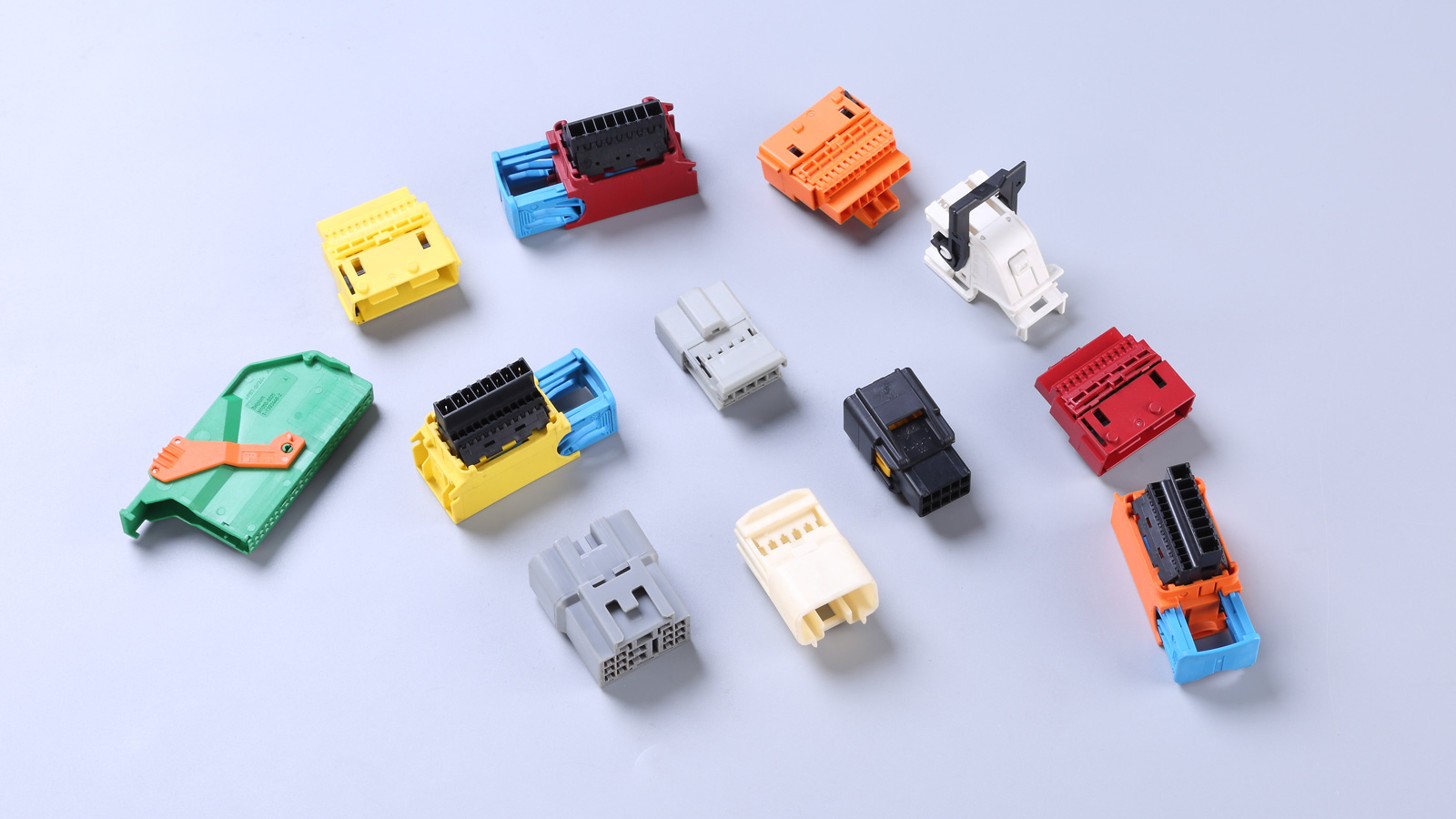
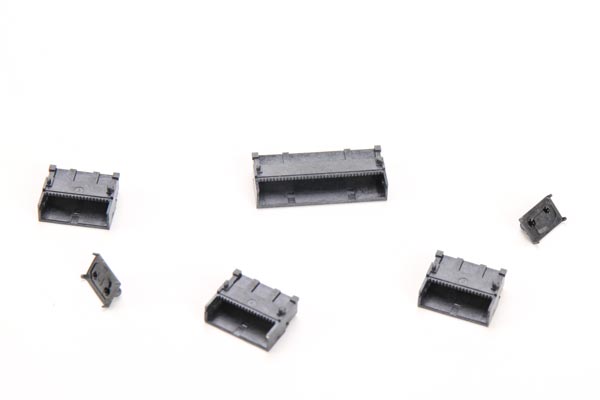
- USB-C, HDMI, and high-speed I/O connectors that must survive repeated reflow and deliver stable signal integrity
- Board-to-board, mezzanine, and FFC/FPC connectors with fine pitch and thin walls
- RF and antenna connectors for 5G infrastructure, handsets, and IoT devices
- CPU and GPU sockets, memory connectors, and high-speed server interconnect components
- Automotive connectors for engine compartments, transmissions, ADAS, and EV battery and powertrain systems
- Consumer electronics components such as camera module holders, SIM and SD card slots, and battery connectors
In nearly all of these cases, the housing is insert-molded around stamped metal terminals, which places additional demands on mold design and process control.
The LCP Injection Molding Process: What Makes It Different
LCP requires a different mindset from molding standard engineering plastics. The following parameters are the most influential for connector quality.
Drying
LCP is not highly hygroscopic, but most resin suppliers recommend drying for two to four hours at approximately 130°C to 150°C before processing to ensure consistent surface quality and mechanical properties.
Melt and Mold Temperatures
Melt temperatures typically range from 290°C to 340°C depending on the grade, and must be set according to the resin manufacturer’s data sheet. Mold temperature generally ranges from 80°C to 140°C. Higher mold temperatures improve surface finish and reduce frozen-in stress, while balanced cooling channel design keeps cycle times competitive.
Injection Speed
Thin-wall connector cavities require fast injection to fill the cavity before the material freezes off. Injection speed, pressure, and transfer position must be optimized together to achieve complete fill without flash or overpacking.
Venting
Because LCP flows so easily and is processed at high temperatures, proper venting is essential. Vents are typically shallow, in the range of 0.01 to 0.02 mm, to prevent burning and die-sweep marks at weld lines and the end of fill.
Anisotropic Shrinkage
LCP molecules orient in the direction of flow, producing different shrinkage along the flow direction and the transverse direction. Depending on the grade, flow-direction shrinkage may be roughly 0.1 to 0.3 percent while transverse shrinkage can reach 0.3 to 0.6 percent. Mold designers must account for this anisotropy, or finished parts will fail tolerance and coplanarity requirements.
Weld Lines
Weld lines are a constant concern in thin-wall connector tools, especially in multi-cavity molds and parts with through-holes. Gate location, gate type, and process settings determine where weld lines form and how strong they are. A skilled molder will design gates to place weld lines in non-critical regions.
Regrind
LCP sprues and runners can be reground, but regrind levels are normally kept low, typically 10 to 25 percent, to preserve mechanical strength, electrical properties, and dimensional consistency. Connectors with tight electrical or structural requirements should use virgin material.
Tooling
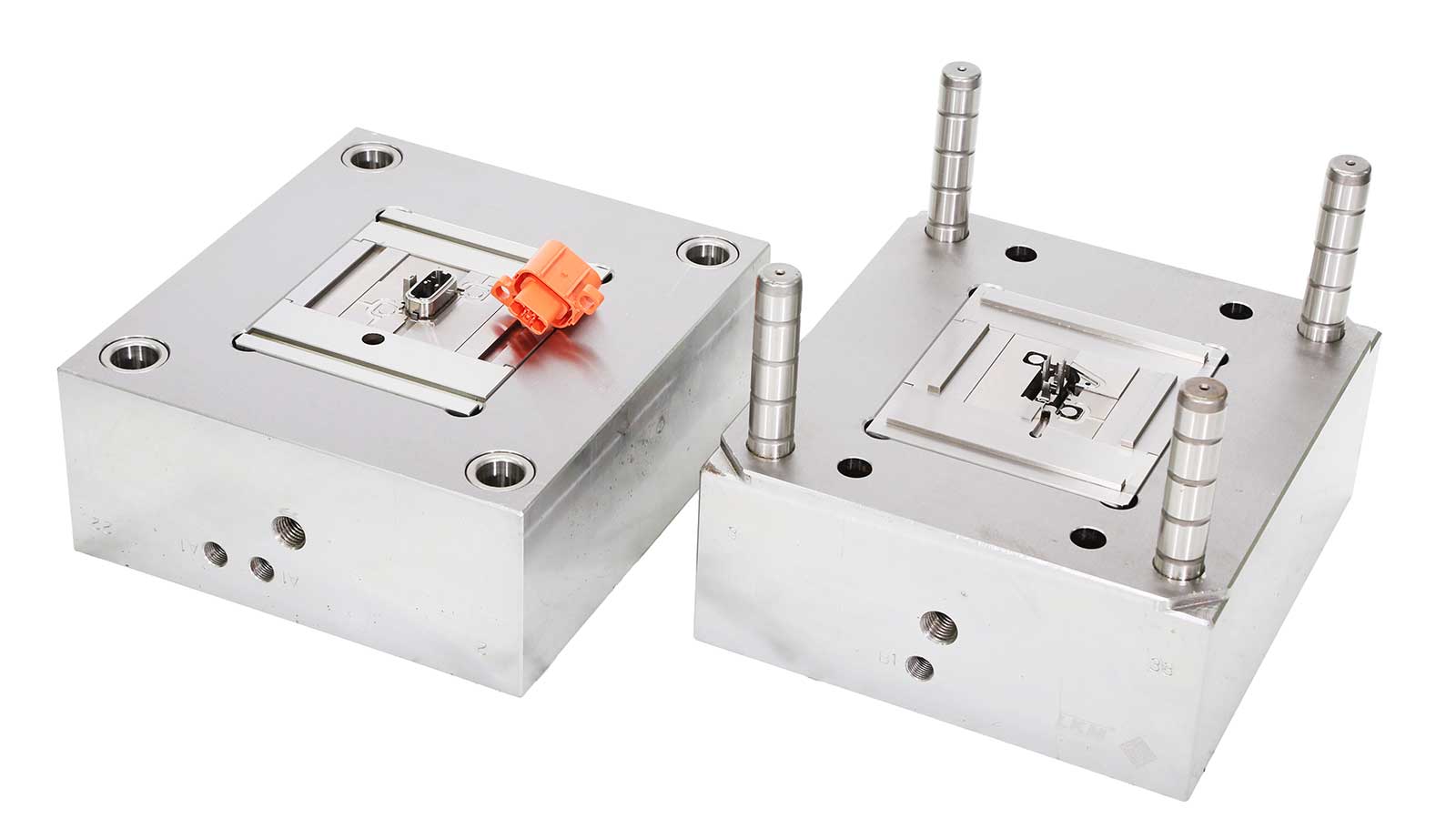
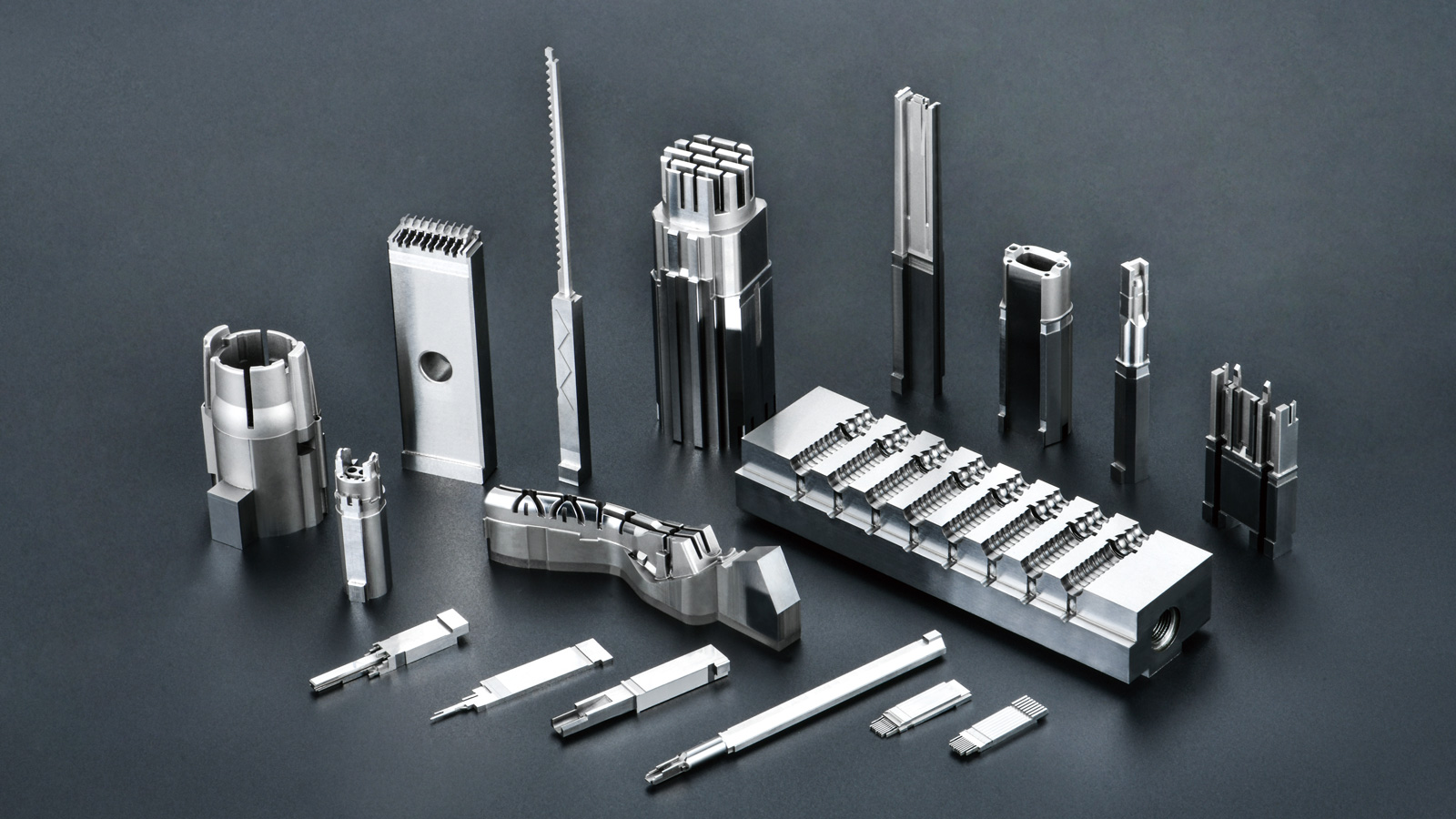
Connector molds are built in hardened tool steel with precise cooling and polished cavity surfaces. The tool must be designed for the material’s anisotropic behavior, and its steel selection and surface treatment must withstand abrasive glass-fiber-filled LCP over long production runs.
Design Considerations for LCP Connectors
- Keep wall thickness in the range of 0.2 to 0.4 mm where possible, and use ribs to add stiffness instead of thicker walls
- Optimize gate location early, because it controls flow orientation, shrinkage, and weld-line position
- Plan for insert molding with stamped terminals, including terminal alignment and sealing of the cavity
- Validate tolerances and coplanarity against the connector’s post-reflow requirements
- Use production-representative tooling for prototyping so that shrinkage and warpage behavior matches mass production
Early design-for-manufacturing review with an experienced molder prevents the most expensive errors in connector development.
How to Choose a Reliable LCP Injection Molding Supplier
The performance of an LCP connector is only as good as the molder behind it. When evaluating a potential LCP injection molding supplier, use the following criteria as a structured checklist.
Relevant Experience
Look for a supplier with a proven track record in thin-wall connector molding, not merely general injection molding. Ask about the thinnest wall sections they have produced, the connector families they serve, and their history with multi-cavity, high-precision tools.
In-House Tooling and Mold Engineering
Suppliers with in-house mold design and mold-making capability can iterate faster and take ownership of the anisotropic shrinkage and weld-line challenges unique to LCP. If tooling is outsourced, verify the strength of the tooling partnership and the process for design reviews.
Process Control and Scientific Molding
A reliable supplier documents process parameters per shot, monitors cavity pressure and temperature, and applies statistical process control. Ask whether they can provide process data, CpK studies, and first-article inspection reports for every batch.
Material Expertise and Resin Partnerships
The best suppliers maintain close relationships with leading LCP resin producers, including Celanese Vectra, Sumitomo SumikaSuper, Polyplastics LAPEROS, Toray Siveras, Solvay Xydar, and DuPont Zenite. This gives them access to the latest grades, application data, and technical support when selecting materials for a specific connector.
Quality Systems and Certifications
Verify certifications relevant to your market, such as ISO 9001 for general quality management and IATF 16949 for automotive components. For high-reliability applications, confirm that PPAP, FMEA, and control plan documentation are part of the standard workflow.
Measurement and Testing Capability
Precision connectors demand precision verification. Confirm that the supplier operates coordinate measuring machines, optical measurement systems, X-ray inspection, and electrical or functional testing suitable for connector dimensions and tolerances.
Secondary Operations
Many connector housings require insert molding, post-mold assembly, plating coordination, or packaging for automated assembly. A supplier that manages these steps internally reduces lead time and quality risk.
Communication and Intellectual Property Protection
For global product teams, engineering-level English communication, CAD compatibility, and responsiveness during development matter as much as shop-floor capability. Ensure that tooling ownership, confidentiality, and IP protection are clearly defined in the agreement.
Questions to Ask a Prospective Supplier
- What is your experience with connector walls below 0.3 mm?
- Which LCP grades do you process regularly, and with which resin partners?
- How do you manage anisotropic shrinkage and weld-line risk in tool design?
- What process data and quality records do you provide with each shipment?
- Can you support insert molding, assembly, and functional testing in-house?
- What are your typical lead times for tooling and production?
Frequently Asked Questions
1. Why is LCP used for electronic connectors?
LCP offers the combination of high heat resistance for reflow soldering, excellent flow for ultra-thin walls, low warpage and dimensional stability, stable electrical properties at high frequency, low moisture absorption, and halogen-free flame retardancy. Together these properties make it the preferred material for high-density, high-reliability connector housings.
2. Can LCP connector housings survive lead-free reflow soldering?
Yes. Glass-fiber-reinforced LCP grades have heat deflection temperatures well above the typical 260°C peak of lead-free reflow profiles, allowing thin housings to pass through soldering without softening or losing dimensional accuracy.
3. What is the minimum wall thickness for LCP injection molding?
With optimized tool design and processing, experienced molders can produce LCP walls in the range of 0.1 to 0.15 mm. Typical production connectors use walls of 0.2 to 0.4 mm to balance fillability, strength, and cost.
4. How do I choose an LCP injection molding supplier?
Evaluate experience with thin-wall connectors, in-house tooling capability, process control and scientific molding, material expertise with major LCP resin producers, quality certifications, measurement and testing equipment, secondary operation support, and IP protection terms. Request process data and quality records before placing production orders.
5. Can regrind be used in LCP connector molding?
Regrind is often used at low levels of roughly 10 to 25 percent for non-critical parts, but it should be avoided for connectors with tight electrical, mechanical, or dimensional requirements. Always confirm property retention with the molder and the resin supplier before approving regrind.
6. How does LCP compare with PBT or nylon for connectors?
PBT offers lower cost but lower heat resistance and higher shrinkage, making it unsuitable for fine-pitch parts that must survive reflow. Nylon absorbs moisture, which changes dimensions and electrical performance. LCP provides superior heat resistance, thin-wall flow, dimensional stability, and high-frequency electrical performance, which justifies its higher material cost for demanding connector applications.
Conclusion
LCP injection molding has become the standard manufacturing route for the most demanding electronic connectors, from USB-C and board-to-board components to automotive and EV interconnect systems. The material’s heat resistance, flowability, and dimensional stability are well documented, but achieving consistent results requires equal expertise in tool design and process control.
The difference between a connector that works and one that fails in the field often comes down to the molder. A qualified LCP injection molding supplier brings thin-wall tooling experience, scientific process control, material knowledge, and the measurement systems needed to deliver precision parts at production volume. Engage potential suppliers early, evaluate them against the criteria above, and treat supplier selection as part of the engineering process rather than a simple procurement step.