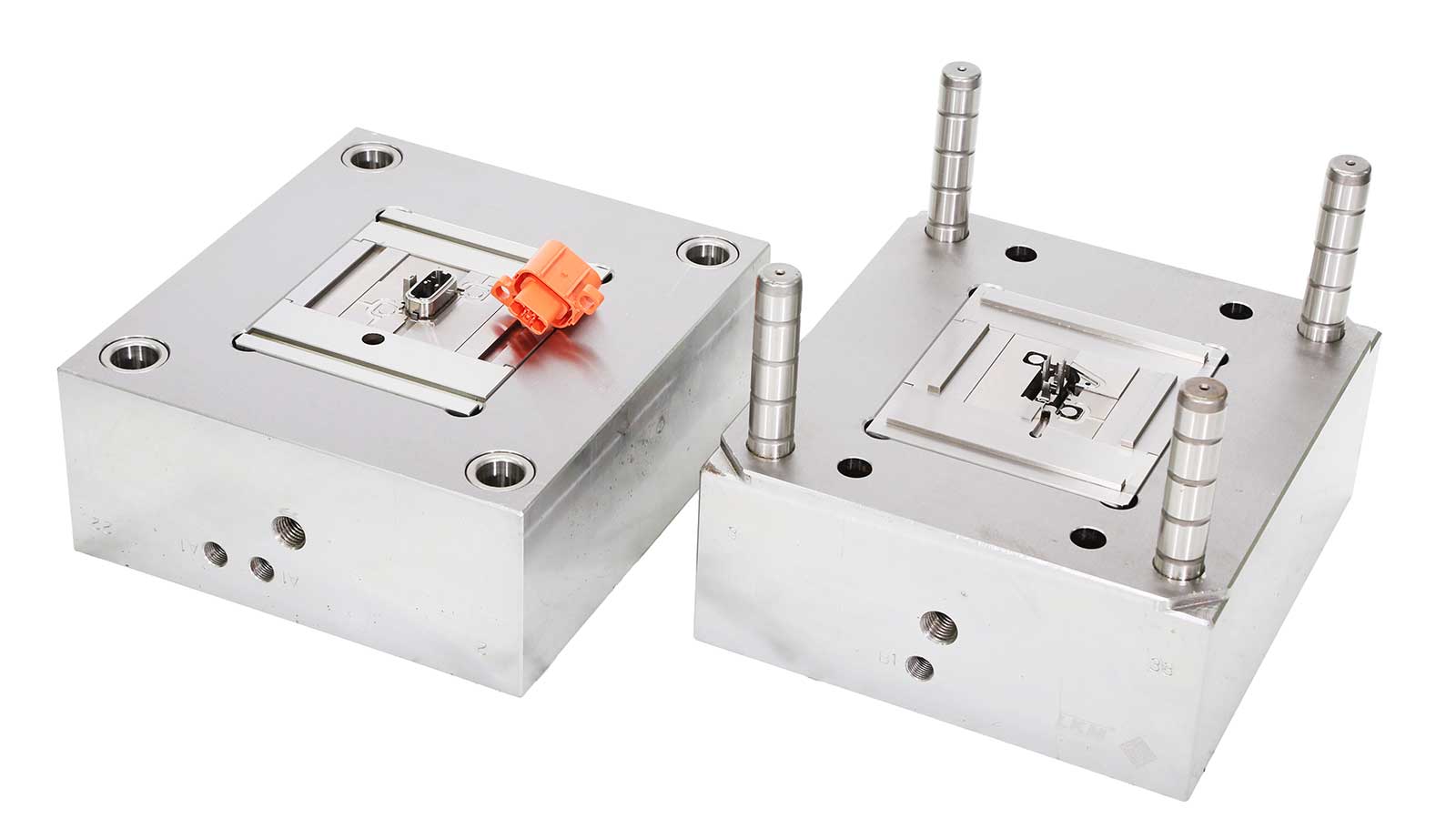


In injection molding production, mold deformation is a high-frequency and costly quality issue. Once a mold deforms, it can cause dimensional deviations and excessive flash on parts at best, and mold sticking, difficult ejection, or even premature scrapping of the entire mold at worst. Understanding the causes of mold deformation is the foundation for mold design and manufacturing companies to improve yield rates and extend mold service life. This article systematically examines the main factors affecting injection mold deformation from five dimensions: design, material, machining, process, and maintenance, and provides targeted prevention approaches.
I. Mold Design and Structural Factors
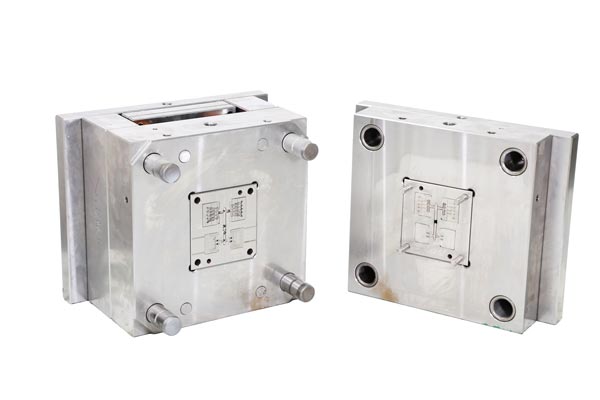
Insufficient structural rigidity is the primary hidden hazard for mold deformation. Under injection pressure, the cavity interior withstands pressures ranging from tens to hundreds of megapascals. If the mold base plates are too thin, support pillars are missing, or cavity side walls are too thin, the platens and cavities will undergo elastic bending. Although elastic deformation partially recovers once pressure is released, repeated loading over the long term accumulates into plastic deformation, ultimately manifesting as an uneven parting line and dimensional drift of the cavity.
Improper cooling system design also has a significant impact. If cooling channels are too close to the cavity surface, too far apart from each other, or unevenly distributed, the mold temperature field becomes severely non-uniform. The thermal stress caused by temperature differences superimposes on the mechanical stress, causing local warpage of the mold. As a rule of thumb, the distance from cooling channels to the cavity surface should be approximately twice the wall thickness, and channel spacing should be evenly arranged according to the part geometry.
An unbalanced gating system should not be overlooked either. In multi-cavity molds, if runner lengths and gate sizes are inconsistent, the filling pressures among cavities differ significantly, causing uneven loading on the mold and resulting in offset deformation. In addition, large wall-thickness differences within the part itself cause uneven shrinkage, which in turn exerts unbalanced wrapping forces and pulling forces on the mold.
II. Mold Material and Heat Treatment Factors
Steel selection determines the upper limit of mold rigidity and resistance to deformation. If large molds use pre-hardened steel of relatively low hardness, the cavity surface tends to collapse and deform under long-term production. High-gloss and high-precision molds, by contrast, require hardened steel combined with appropriate heat treatment. Metallurgical defects in the material, such as segregation, inclusions, and porosity, can induce local deformation or even cracking at stress concentration points.
Heat treatment process is a critical focus for deformation control. Excessively fast or non-uniform quenching cooling rates generate significant internal stress and non-uniform phase transformation. Insufficient tempering fails to effectively eliminate quenching stress, allowing the mold to gradually release stress and undergo dimensional changes during subsequent machining or service. Therefore, adequate tempering after quenching, and stress-relief annealing for precision molds, are key process measures for controlling deformation.
III. Machining and Manufacturing Factors
Residual stress is the most common source of deformation in the machining stage. During rough machining, the large cutting volume and intense heat generation leave relatively high levels of residual stress in the surface layer of the workpiece. If stress relief treatment is skipped before finish machining, the material slowly releases stress afterward, causing finished dimensions to drift. Therefore, arranging stress relief after rough machining and adopting symmetrical cutting and small depths of cut during finish machining are common industry practices.
The thermal effects of EDM and wire cutting should not be underestimated. Electrical discharge machining leaves a white layer and a heat-affected zone on the cavity surface. The white layer is brittle and prone to micro-cracks, which may develop into macroscopic deformation during subsequent service. When wire cutting thin-wall inserts, the release of internal stress in the material can cause noticeable deformation, so machining allowance should be reserved and secondary finishing performed after cutting.
The grinding and assembly stages also require vigilance. Excessive grinding feed rates and inadequate cooling can cause grinding burn and residual tensile stress. During assembly, uneven preload and inconsistent locating datums subject the mold to additional deformation under the clamped condition.
IV. Injection Molding Process and Production Factors
Improper process parameter settings directly intensify the load on the mold. Excessively high injection pressure, overly large holding pressure, or excessively long holding time all significantly raise the internal cavity pressure, subjecting the mold to mechanical loads beyond its design range. Excessively high melt temperature reduces the fatigue strength of the mold material and accelerates deformation accumulation.
Unstable mold temperature control is a direct trigger for thermal deformation. Frequent switching of the mold between high and low temperatures, or large temperature fluctuations from the mold temperature controller, creates thermal stress cycles. Prolonged exposure to excessively high mold temperatures causes the mold material to soften due to over-tempering; once hardness drops, the mold deforms more easily. During production, the control accuracy of the mold temperature controller should be strictly maintained, and rapid heating and cooling of the mold from frequent machine startups and shutdowns should be avoided.
Clamping force and machine condition also affect the mold. Insufficient clamping force causes the parting line to open, while excessive clamping force over-stresses the platens. Poor platen parallelism or wear on the injection molding machine transmits uneven forces to the mold, leading to overall offset deformation after long-term production.
V. Usage, Maintenance, and Environmental Factors
Thermal fatigue is the main cause of deformation and crazing during long-term mold service. In every injection cycle, the mold cavity surface undergoes alternating heating and cooling. The temperature difference between the surface and the interior generates alternating thermal stress, which accumulates over time into thermal fatigue, manifesting as fine cracks and dimensional changes on the cavity surface.
Inadequate maintenance accelerates deformation. Rust on the mold surface, debris left on the parting line, and worn guide mechanisms left unrepaired all cause abnormal forces during mold closing. Molds that have not undergone stress relief treatment for a long time may also deform due to their own weight or improper loading during storage and transportation.
Storage methods also affect mold precision. Large molds stored flat on the floor for extended periods with insufficient support points can develop flexural deformation under their own weight. The correct approach is vertical storage on dedicated mold racks, combined with regular precision inspection and repair.
Comprehensive Prevention Approach
Controlling mold deformation is not the responsibility of any single stage; it is a systematic project running through the entire process of design, material selection, machining, process, and maintenance. Ensuring structural rigidity and optimizing cooling layout during the design phase, matching materials and heat treatment schemes during material selection, strictly controlling residual stress during manufacturing, standardizing process parameters and mold temperature management during production, and conducting regular maintenance and precision inspection during service — only when every link is addressed can mold deformation risk be minimized.
Frequently Asked Questions (FAQ)
Q1: Can a mold that has already deformed be repaired? It depends on the degree of deformation. Minor deformation can be repaired by lapping, refinishing the parting line, or re-machining the datums. Moderate deformation can be handled through local welding repair or insert replacement, but must be combined with stress relief processes. For severely deformed molds with structural fatigue, the repair cost may approach that of a new mold, and it is advisable to evaluate whether to scrap and rebuild.
Q2: What usually causes mold deformation during initial trial molding? It most likely points to the design or manufacturing stage. Common causes include insufficient structural rigidity, improper cooling design, stress not fully eliminated due to inadequate heat treatment, or excessive residual stress left from the finish machining stage. It is recommended to check mold base rigidity, stress relief records, and mold temperature uniformity first.
Q3: How can you determine whether mold deformation is a design problem or a process problem? It can be investigated from two directions. If the deformation follows a stable pattern across multiple trial runs and correlates with pressure distribution, it is mostly a design problem. If the deformation varies with production batch, mold temperature fluctuations, or changes of machine, it is mostly a process or usage problem. Combining mold temperature distribution measurement with analysis of the deformation location can help identify the cause more accurately.
Q4: Is mold deformation the same as part deformation? No. Part deformation refers to warpage and uneven shrinkage of the molded part itself, mainly caused by the molding process and part design. Mold deformation refers to changes in the dimensions and shape of the mold body itself, which in turn causes part defects. The two influence each other, but their causes, detection targets, and solution paths are all different.